
Industries
Food production
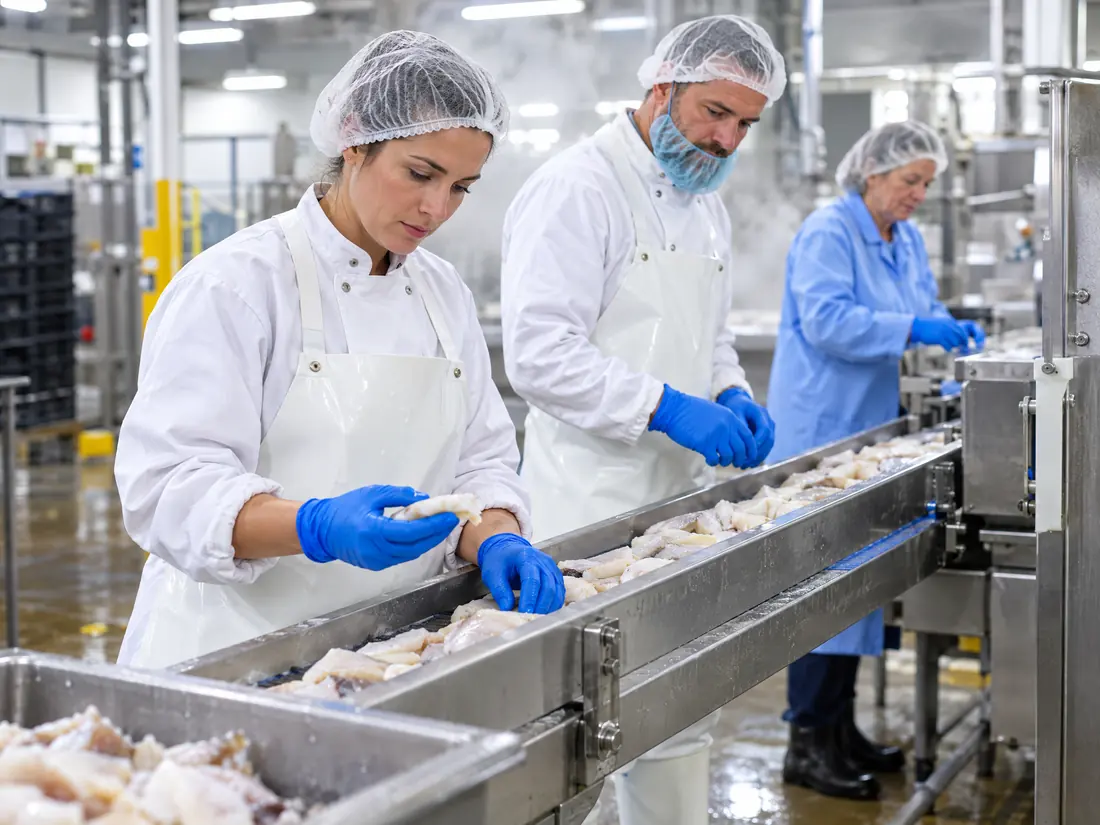
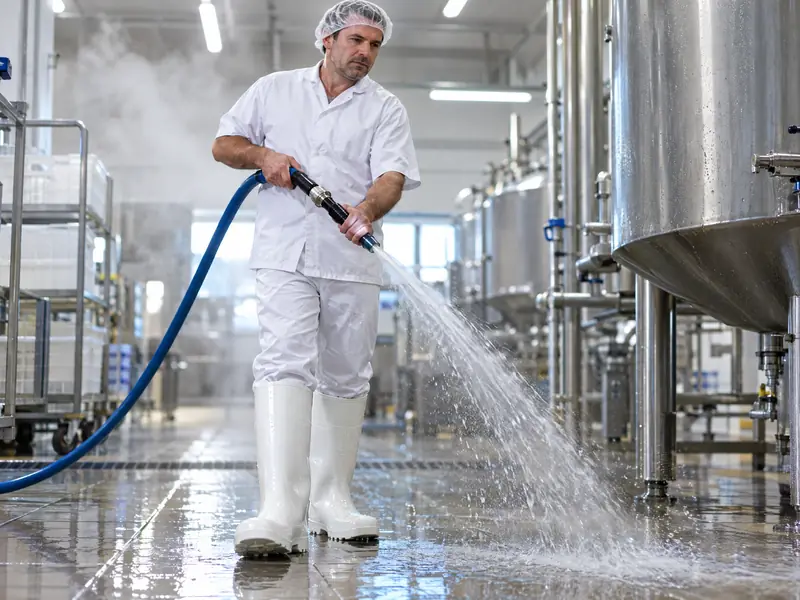
In food production, clothing protects both the worker and the product. Hygiene rules decide everything from fabric choice and colour to pocket layout and button type.
- Related product groups
- 6
- Product types
- 42
- Industries
- Industries
- Get a quote
- Message us on WhatsApp
External pockets and exposed buttons are not wanted on a food line; anything that could end up in the product is designed out. Food clothing is therefore built differently from general workwear.
Colour supports traceability: light-coloured clothing shows soiling immediately, and blue-toned gloves are easier to spot if a fragment reaches the product.
For crews in chilled rooms the thermal layer is planned separately, and hygiene requires that layer to be washable too.
Related product groups

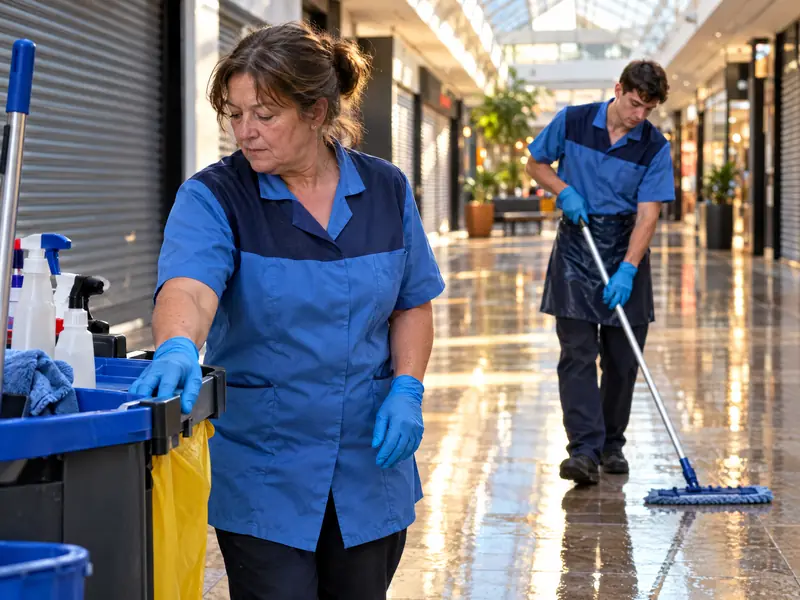
A set in contact with chemicals, washed often, recognised from afar.
See details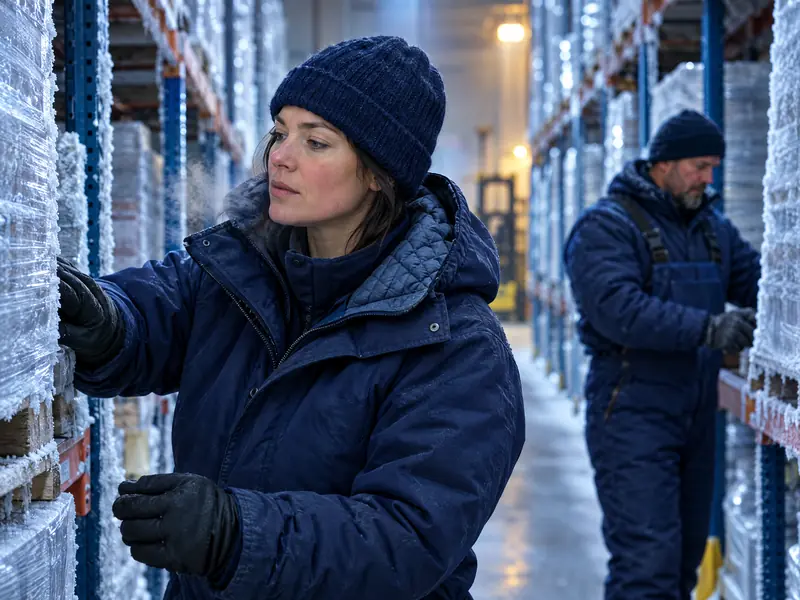
From cold store to open site: layers that keep the heat in.
See details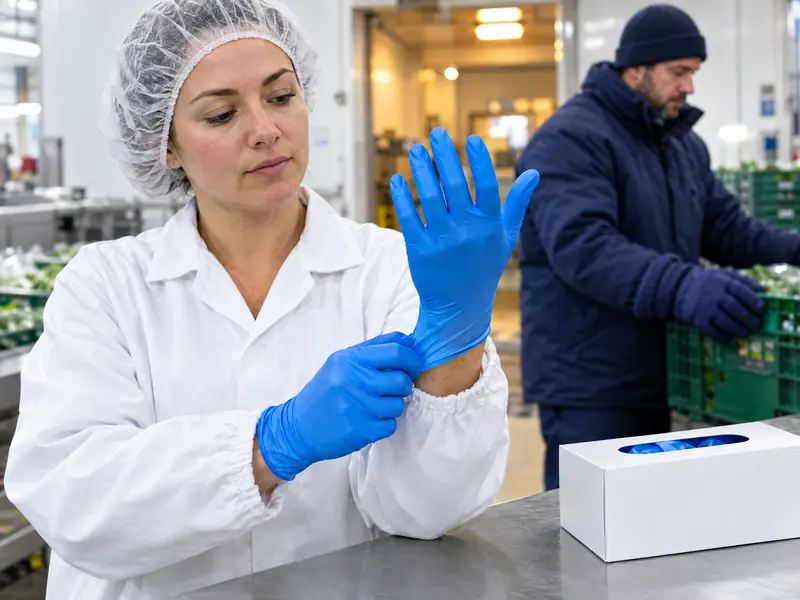
A two-ended group: from the cold store to hygienic use.
See details
Frequently asked questions
Which clothing details matter in food production?
No exposed buttons or external pockets, a preference for light colours, hot-wash capability, and systematic use of completers such as hairnets and overshoes.
What clothing is used in food production?
A press-stud tunic or coat without external pockets, a hairnet or cap, a beard cover where required, an apron and hygienic boots. Colour is often used to separate zones as well.
Why are light colours preferred in a food plant?
So that soiling is immediately visible. Dark colours hide it, which is a disadvantage in hygiene-led areas because a soiled garment then stays in service longer than it should.
Hairnet or cap?
A hairnet covers the hair completely and is widely used as a disposable; a cap looks corporate but may not cover everything. Hairnets dominate in production areas, caps in packing and service.
What matters in a food industry boot?
A seamless moulded body, high-temperature washability and a smooth surface with no crevice for residue. Where wet floors and impact risk coexist, add a toecap and penetration-resistant midsole.
At what temperature should garments be washed?
Sixty degrees is the common protocol. The fabric is chosen to suit that and the site's disinfectant, otherwise the departmental colour system blurs within months.
Let's talk about what you need
Tell us your headcount, the hazards on site and your delivery schedule; we will work out the fabric options, branding and pricing together.
Currently for corporate supply and wholesale custom production; retail coming soon.
Quote request
Fill in the form and we will come back to you the same working day. You can also reach us on WhatsApp.