
Foot protection
Safety wellingtons
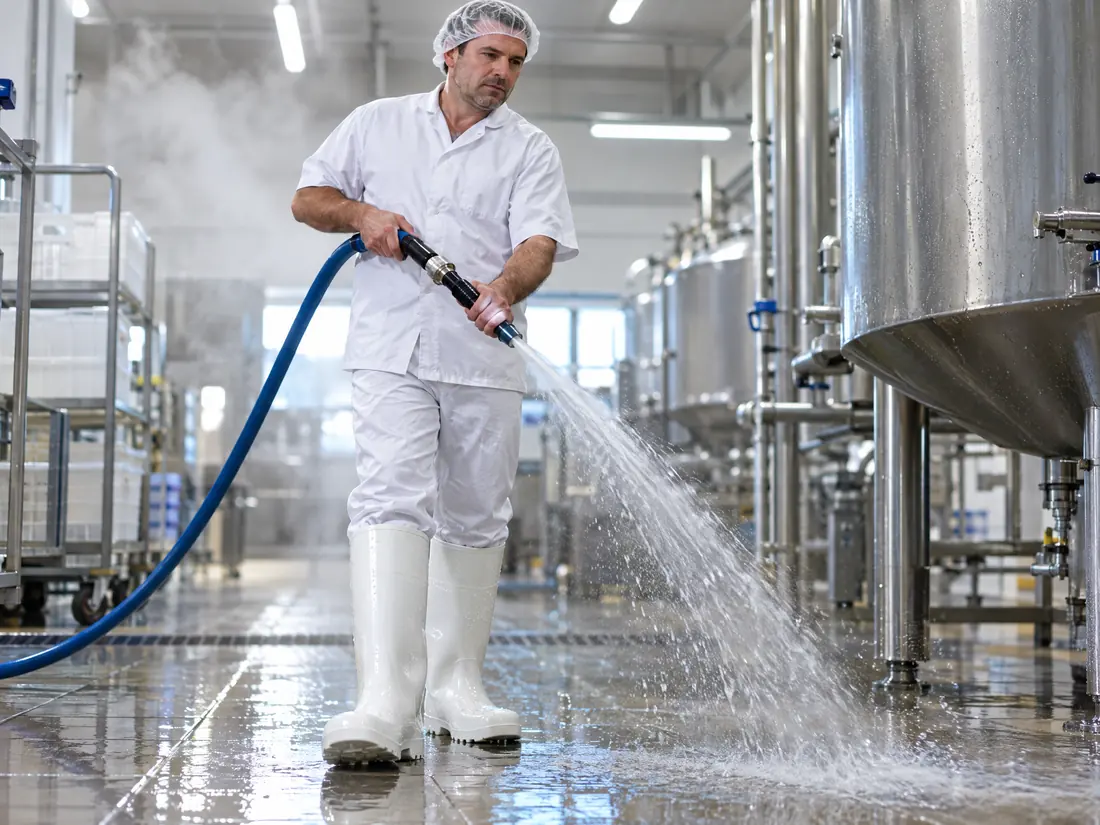
A work wellington fully isolates the foot and lower leg from liquid contact. It is used in food production, agriculture, water treatment, construction and chemical sites wherever water and mud are constant.
- Main group
- Foot protection
- Product types
- 6
- Standards
- EN ISO 20345 · EN ISO 20347
- Industries
- 2
Material is chosen by application: easy-clean, light-coloured models for food production, compounds resistant to the specific chemical in chemical environments, insulating models for electrical work.
Perspiration becomes an issue over long wear; the lining and a removable insole directly affect that comfort.
Boots are the answer where water and chemicals stand on the floor rather than fall from above. Height is set against the depth of standing liquid and the way the work is done; a knee boot is enough in most cases, a thigh boot only where the crew truly stands in deep water.
Hygiene environments need a different construction. In food production, seamless moulded boots that can be washed at high temperature and that leave no crevice for residue are preferred, and colour is often used to separate zones.
Products in this group
- Fully sealed PVC and rubber options
- Steel toe and non-safety versions
- Light-coloured, cleanable models for food production
- Insulating boots for electrical work
- Removable insole
Related standards
2 Standard
EN ISO 20345
Safety footwear (200 J toe protection)
EN ISO 20347
Occupational footwear (without toe protection)
Products in this group
06- PVC work wellington
- Steel toe wellington
- Electrician boot
- Food industry boot
- Agricultural boot
- Thigh boot
Industries we serve
Related product groups
Foot protection

Frequently asked questions
Which boot should be used in food production?
Easy-clean, non-porous and usually light-coloured models are preferred; soiling shows immediately and hygiene inspection becomes easier. A slip-resistant sole is especially important here.
PVC or nitrile?
PVC is economical and handles water and general soiling. Nitrile withstands oils, fats and many chemicals far better and lasts longer in maintenance and food processing areas.
Can boots have a toecap?
Yes. Boots with a toecap and penetration-resistant midsole are produced and are the correct choice where wet floors and impact risk coexist.
PVC or nitrile boots?
PVC is economical and handles water and general soiling. Nitrile withstands oils, greases and many chemicals far better and lasts longer in maintenance and food processing areas.
Can a boot carry a toecap?
Yes. Boots with a toecap and penetration-resistant midsole are produced and are the right choice where wet floors and impact risk coexist.
Request a quote for this group
Tell us your headcount, the hazards on site and your delivery schedule; we will work out the fabric options, branding and pricing together.
Currently for corporate supply and wholesale custom production; retail coming soon.
Quote request
Fill in the form and we will come back to you the same working day. You can also reach us on WhatsApp.