
Product groups
Foot protection
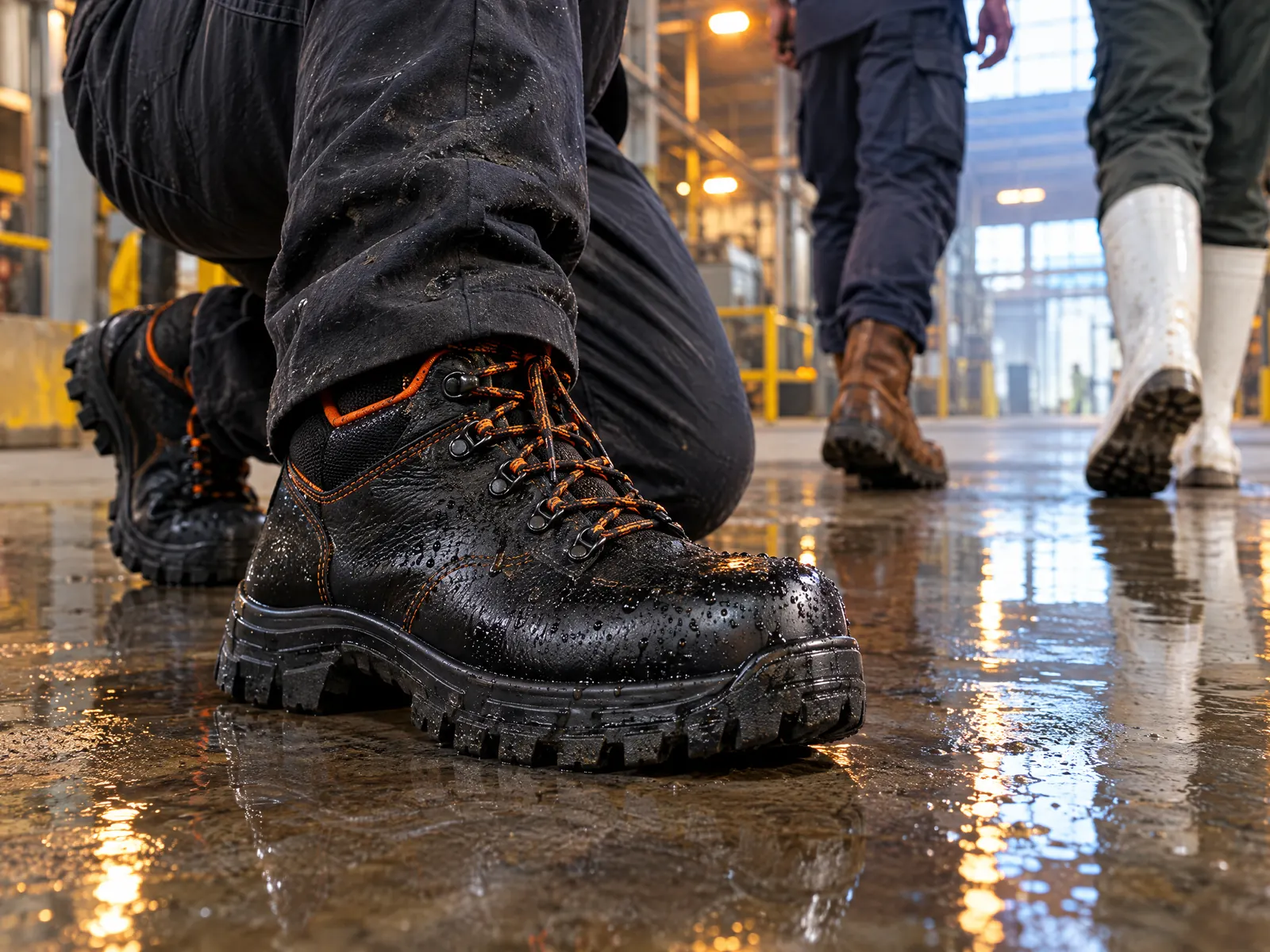
Foot protection covers the foot against falling objects, penetration, slipping, heat and electrical hazards. The right choice comes from matching toe type, sole construction and EN ISO 20345 class to the site.
- Sub-groups
- 5
- Product types
- 29
- Standards
- 2
- Product groups
- Product groups
Sub-groups
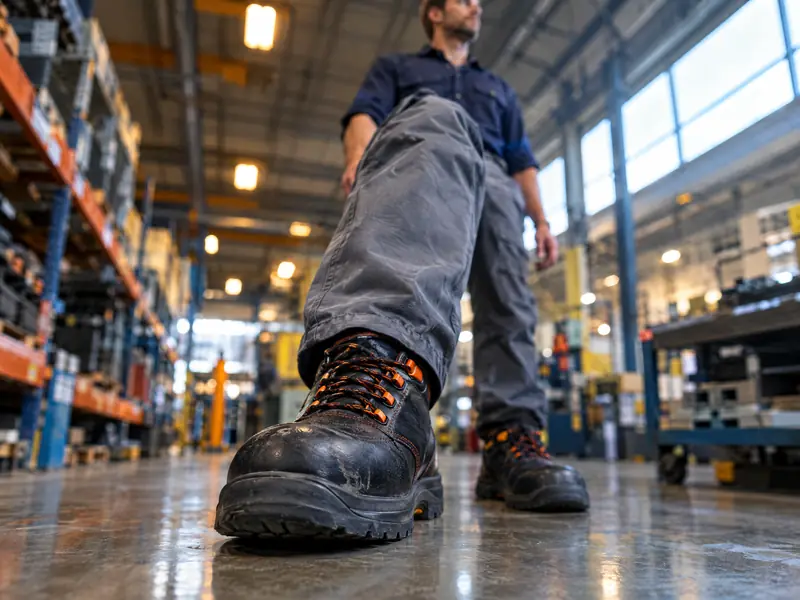
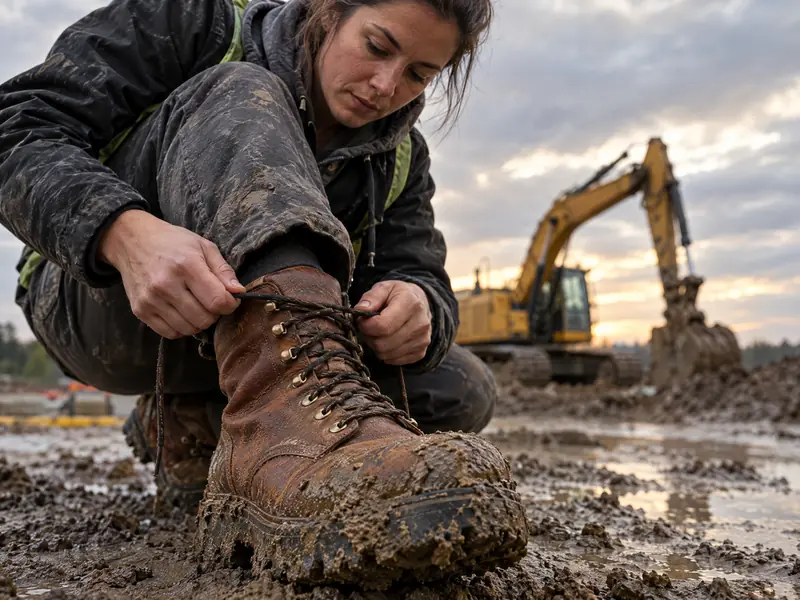


The ground decides the choice: a construction site with nails and sharp debris calls for a penetration-resistant midsole, a wet floor for a slip-resistant sole, a hot surface for a heat-resistant one. On toe type, steel is more economical while composite is lighter and passes through metal detectors.
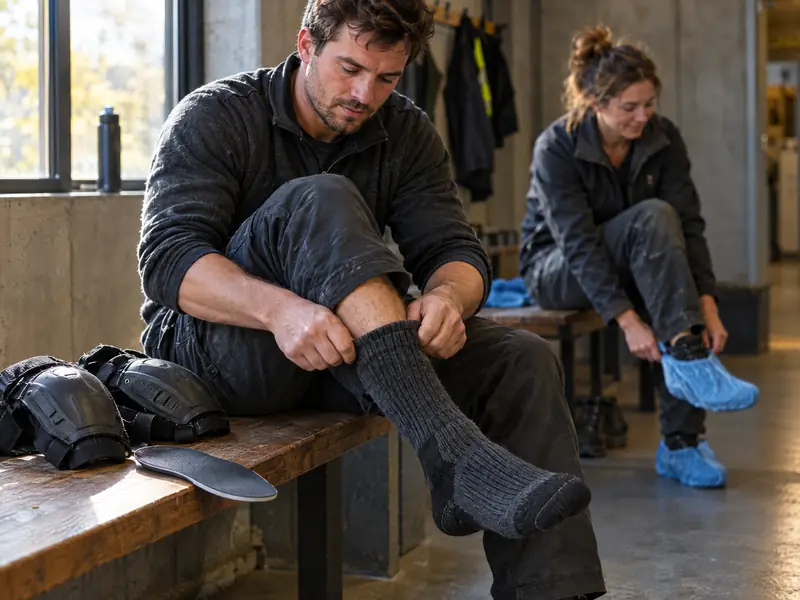
For a crew on its feet all day, comfort is part of safety. A heavy, tight shoe leads workers to misuse it, so trying sizes and choosing the right footbed should not be skipped.
Related standards
2 Standard
EN ISO 20345
Safety footwear (200 J toe protection)
EN ISO 20347
Occupational footwear (without toe protection)
Frequently asked questions
What is the difference between S1, S1P, S2 and S3?
All include toe protection. S1 adds antistatic properties and an energy-absorbing heel, S1P adds a penetration-resistant midsole, S2 increases water resistance, and S3 combines penetration resistance, water resistance and a cleated sole. S3 is the common choice across construction sites.
Composite or steel toe?
Protection level is the same under the standard. Composite is lighter, does not conduct heat and passes metal detectors; steel is usually more economical. Composite stands out in airports, food production and electrical work.
What is the difference between S1, S1P, S2 and S3?
The letters describe the protection package. S1 covers antistatic properties and an energy-absorbing heel; S1P adds a penetration-resistant midsole; S2 adds water penetration resistance; S3 combines all of these with a cleated outsole. Wet sites with sharp debris call for S3.
Steel toecap or composite?
Both meet the same impact requirement. Composite is lighter and does not conduct cold, which helps in winter and in metal-detection areas; steel is thinner, so the shoe is more compact.
When should safety footwear be replaced?
There is no fixed period; condition decides. A smoothed tread, a cracked upper, a compressed midsole or a deformed toecap all end its service life however new it looks.
Why must sizes be trialled on site?
Feet swell by the end of a shift, so footwear fitted in the morning tightens by afternoon. Trialling a sample set for a week before the bulk order puts the size curve on real measurements.
Request a quote for this group
Tell us your headcount, the hazards on site and your delivery schedule; we will work out the fabric options, branding and pricing together.
Currently for corporate supply and wholesale custom production; retail coming soon.
Quote request
Fill in the form and we will come back to you the same working day. You can also reach us on WhatsApp.