Industry uniforms
Cleaning and service staff uniforms
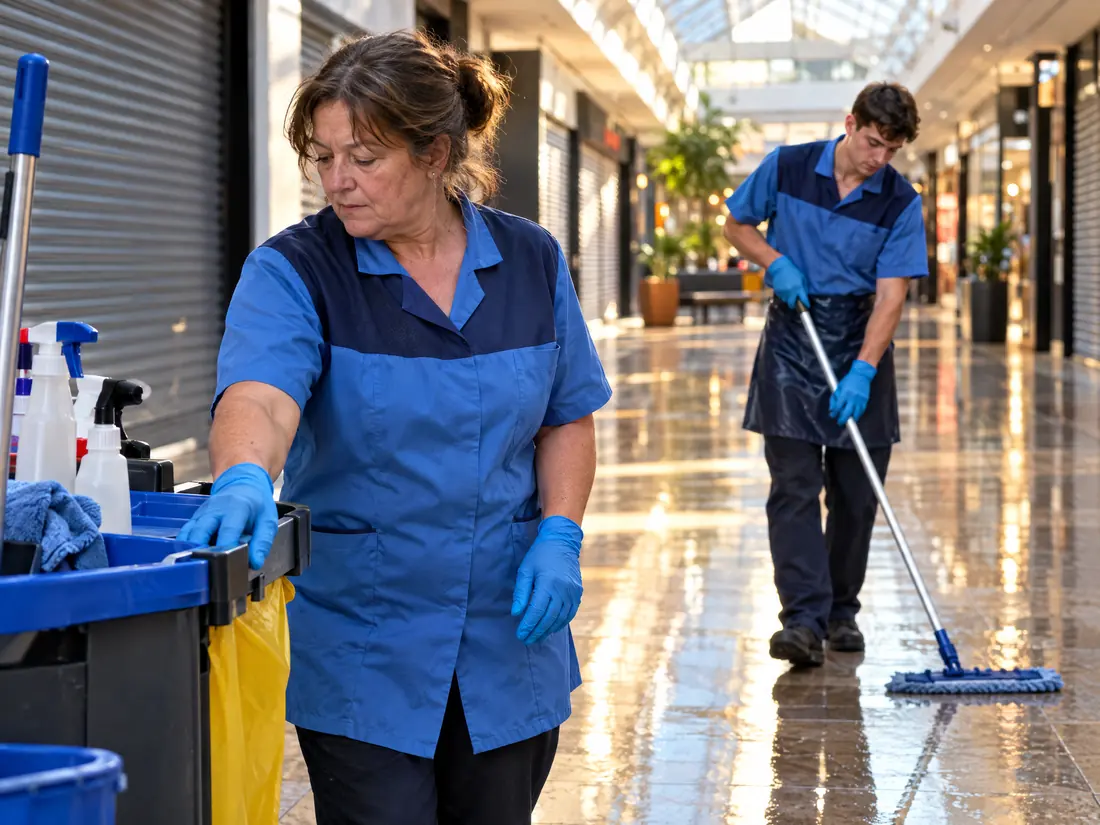
Cleaning and service staff uniforms face continuous chemical and water contact, are washed often and must be recognisable at a distance. Durability and hygiene go together in this group.
- Main group
- Industry uniforms
- Product types
- 6
- Standards
- —
- Industries
- 4
Chemical contact affects fabric colour and structure quickly, so fabrics with high colour fastness and wash resistance are preferred.
In public spaces such as shopping centres, hospitals and offices, staff need to be identifiable; corporate colour and back lettering answer that need.
Cleaning staff clothing gets wet several times a day and meets chemicals constantly. Quick drying therefore matters as much as wash resistance; heavy fabrics that dry slowly become uncomfortable mid-shift and hold odour.
In public areas, visibility is a matter of trust. Legible role lettering on the back helps guests approach the right person and makes the job easier. The lettering should be sized to be read from three metres.
Products in this group
- Fabric resistant to chemicals and frequent washing
- Back lettering and corporate colour
- Apron, suit and vest alternatives
- Liquid-proof apron option
- Hairnet, glove and overshoe completers
Products in this group
06- Cleaning apron
- Cleaning suit
- Service staff vest
- Liquid-proof apron
- Hairnet
- Overshoes
Related product groups
Industry uniforms

The guest's first eye contact with the brand: the service team.
See details



For the team that moves between the office and the site.
See details
Frequently asked questions
Do you apply back lettering?
Yes. Large-format organisation or role lettering is applied to the back by print or transfer; it is the most requested arrangement for public areas.
Is a liquid-proof apron always needed?
In wet cleaning and dishwashing areas, yes. For dry cleaning and dusting it is unnecessary, and when used unnecessarily it traps heat and gets removed. Two separate sets by job description are recommended.
At what temperature should the garments be washed?
Sixty degrees is the common protocol for garments in chemical contact. The fabric is chosen to suit, and the care instruction is supplied in writing with the bulk order.
Why does cleaning clothing need to dry fast?
It gets wet several times a day. Heavy, slow-drying fabric becomes uncomfortable mid-shift and holds odour, while light fast-drying fabric serves both comfort and hygiene.
How large should back lettering be?
Readable from three metres. In public areas, legible role lettering helps visitors approach the right person and makes the job easier.
Request a quote for this group
Tell us your headcount, the hazards on site and your delivery schedule; we will work out the fabric options, branding and pricing together.
Currently for corporate supply and wholesale custom production; retail coming soon.
Quote request
Fill in the form and we will come back to you the same working day. You can also reach us on WhatsApp.