
Foot protection
Safety shoes
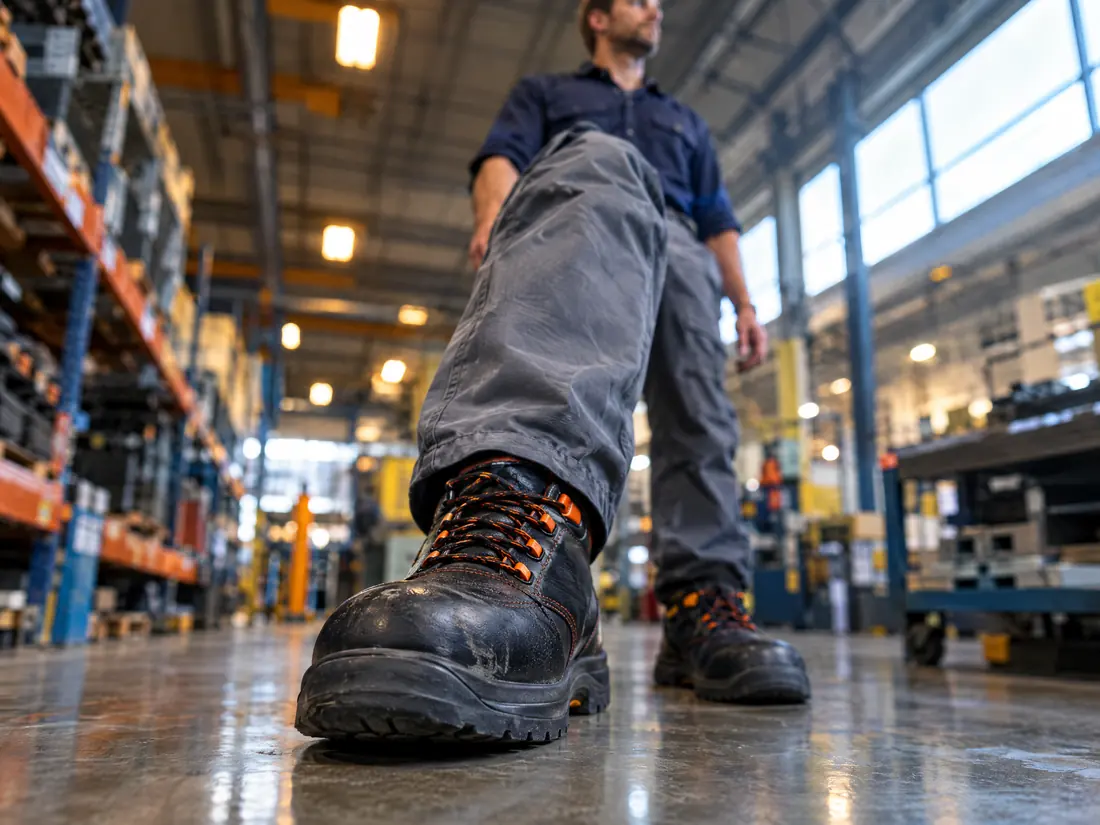
A safety shoe is foot protection that includes toe protection under EN ISO 20345 and is classified against the ground hazard on site. Selection matches toe type and sole properties to the site.
- Main group
- Foot protection
- Product types
- 6
- Standards
- EN ISO 20345 · EN ISO 20347
- Industries
- 2
The classes are cumulative: S1 provides antistatic properties and an energy-absorbing heel, S1P adds a penetration-resistant midsole, S2 increases water resistance, and S3 combines penetration resistance, water resistance and a cleated sole. S3 is the most common choice across construction.
For crews on their feet all day, weight and footbed support matter as much as protection. An uncomfortable shoe leads workers to wear it unlaced or incompletely, which removes the protection in practice.
Safety footwear is chosen by three separate questions: what can fall on the foot, what the foot can step on, and what the floor is like underneath. A toecap answers the first, a penetration-resistant midsole the second, and the outsole compound and tread the third. Specifying one and ignoring the others leaves a gap.
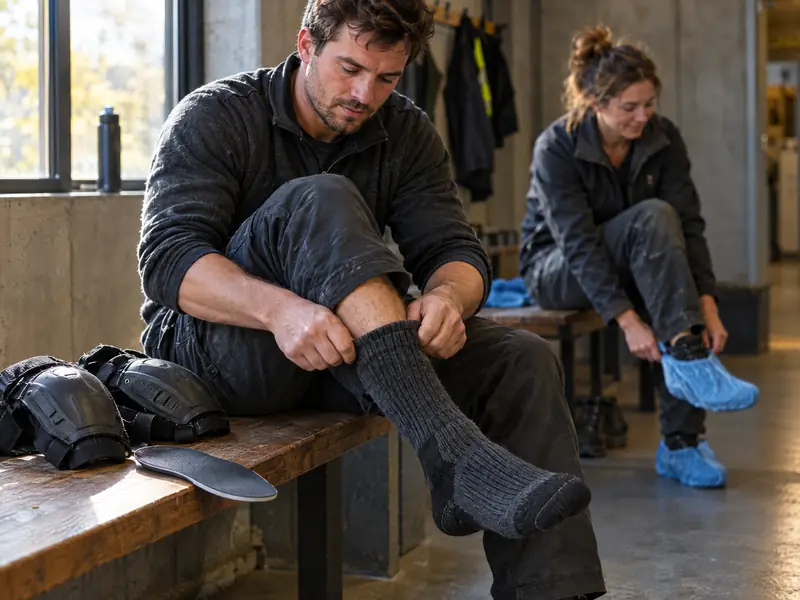
Trialling a size is not a formality. Feet swell by the end of a shift, so footwear fitted in the morning becomes tight by the afternoon. Bulk orders are best placed after a sample set is trialled on site for a week and the size curve adjusted.
Products in this group
- Steel and composite toe options
- Penetration-resistant midsole (P) alternative
- Slip-resistant and oil-resistant sole
- Antistatic properties and energy-absorbing heel
- Breathable summer and lined winter models
Related standards
2 Standard
EN ISO 20345
Safety footwear (200 J toe protection)
EN ISO 20347
Occupational footwear (without toe protection)
Products in this group
06- Steel toe safety shoe
- Composite toe safety shoe
- S1P safety shoe
- S3 safety shoe
- Occupational shoe without toe cap
- Summer safety shoe
Industries we serve
Related product groups
Foot protection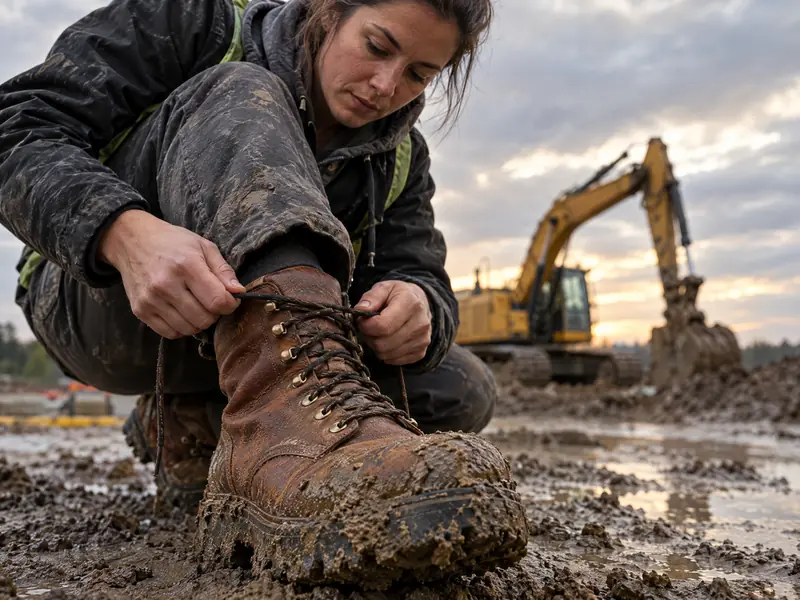


Frequently asked questions
What is the difference between S3 and S1P?
Both include a penetration-resistant midsole. S3 additionally meets water resistance and cleated sole requirements; S3 is preferred on muddy and wet construction sites.
Can sizes be tried?
A trial set can be sent for bulk orders. Sizing errors are the most common problem in foot protection, so we recommend not skipping this step.
Steel toecap or composite?
Both meet the same impact requirement. Composite is lighter and does not conduct cold, which matters in winter and in metal-detection areas; steel is thinner, so the shoe can be more compact.
How often should safety footwear be replaced?
There is no fixed period; it goes by condition. Tread worn smooth, a cracked upper, a compressed midsole or a deformed toecap all end its service life regardless of how new it looks.
What is the difference between S1P and S3?
S1P covers antistatic properties, an energy-absorbing heel and a penetration-resistant midsole but no water resistance. S3 adds water penetration resistance and a cleated outsole, which is why wet sites specify it.
Why trial sizes on site?
Feet swell by the end of a shift, so footwear fitted in the morning tightens by the afternoon. A week's trial before the bulk order puts the size curve on real measurements.
Request a quote for this group
Tell us your headcount, the hazards on site and your delivery schedule; we will work out the fabric options, branding and pricing together.
Currently for corporate supply and wholesale custom production; retail coming soon.
Quote request
Fill in the form and we will come back to you the same working day. You can also reach us on WhatsApp.