
Foot protection
Specialty safety footwear
Specialty safety footwear covers models built for a specific hazard beyond general site use: static control, electrical insulation, a sole resistant to high temperature, or a quick-release welder construction.
- Main group
- Foot protection
- Product types
- 5
- Standards
- EN ISO 20345
- Industries
- 1
In welding areas a bellows-covered shoe stops spattering metal entering through the lacing, and a quick-release mechanism reduces burn risk.
ESD footwear is not the same as antistatic footwear: ESD models work within a narrower resistance range and form part of the grounding system in electronics manufacturing.
Some work environments introduce a requirement ordinary safety footwear does not cover: static dissipation in electronics, heat-resistant soles at a furnace, insulation in electrical work, metal-free construction where detectors are used. Each is a separate specification and they are not interchangeable.
In these categories the compatibility between footwear and floor matters most. ESD footwear only works on a conductive floor, and insulating footwear only works if the floor is dry. Reviewing the environment together with the product avoids buying protection that cannot function.
Products in this group
- ESD class static-controlled models
- Electrically insulating options
- Bellows-covered, quick-release welder model
- Heat-resistant (HRO) sole
- Fully metal-free construction that passes detectors
Related standards
1 Standard
Safety footwear (200 J toe protection)
Products in this group
05- ESD safety shoe
- Electrician shoe
- Welder shoe
- HRO sole shoe
- Metal-free safety shoe
Industries we serve
Related product groups
Foot protection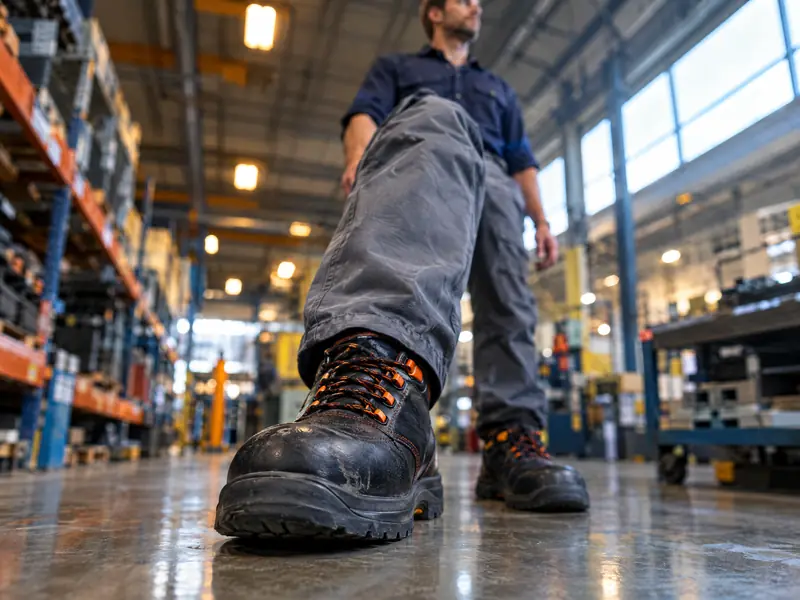

Related guides
All guides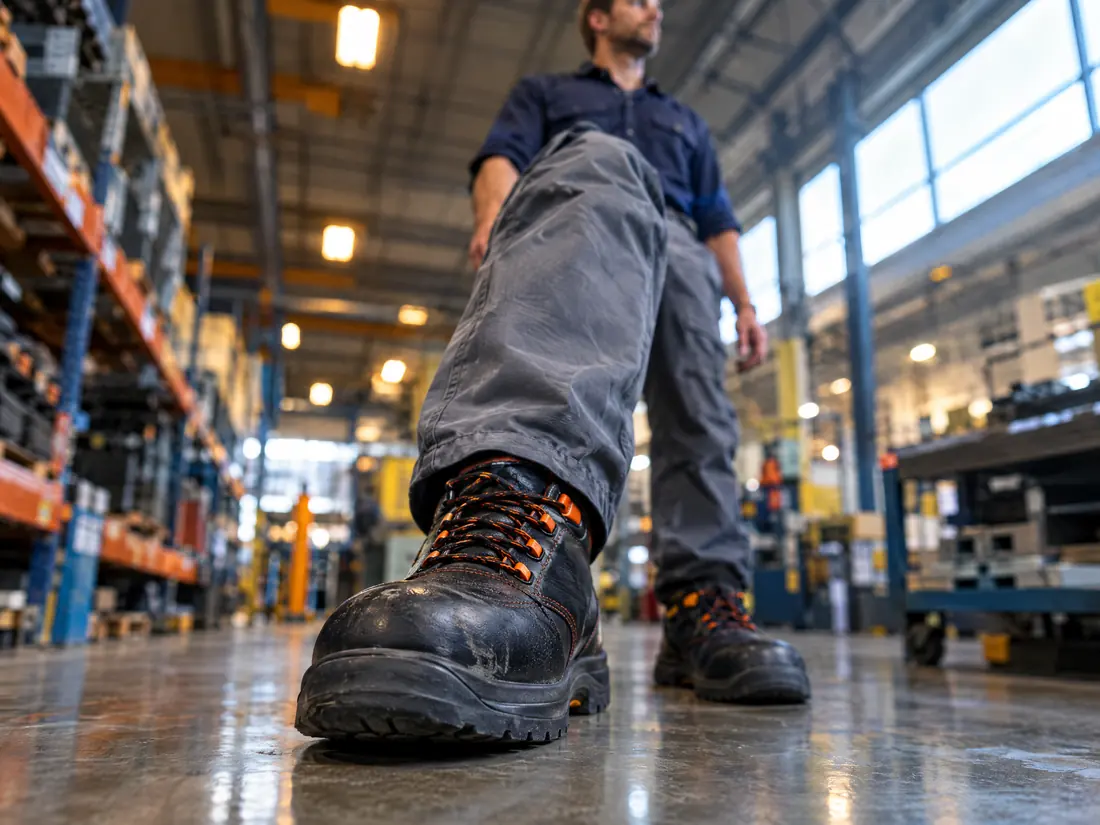
Safety Footwear Ratings Explained: SB, S1, S1P, S3 and the 2022 Codes
How to read the S code and extra symbols on EN ISO 20345 safety footwear, and what changed between the 2011 and 2022 editions.
Read the guide
Antistatic vs ESD Clothing: EN 1149-5 and EN 61340-5-1 Explained
A side-by-side guide to antistatic clothing for explosive atmospheres and ESD garments for electronics: standards, test methods, earthing and footwear resistance.
Read the guide
Frequently asked questions
Is ESD footwear the same as antistatic?
No. Antistatic footwear is about personal safety and has a wide resistance range; ESD footwear protects components and works in a much narrower, controlled range. Electronics production requires the second.
Can metal-free footwear carry a toecap?
Yes, with a composite toecap and a textile penetration-resistant midsole. This gives full protection while passing through metal detectors.
Is insulating footwear enough on its own?
No. Insulating footwear only works if the floor is dry. Reviewing the environment together with the product avoids buying protection that cannot function.
Does metal-free footwear compromise protection?
No. A composite toecap and a textile midsole meet the same standard; the difference lies in weight, heat conduction and passing through metal detectors.
Why does welding footwear have a flap?
The lacing area is where spattering molten metal gets in most easily. The flap covers that gap, and a quick-release fastening lets the wearer take the shoe off in seconds if metal gets inside.
Request a quote for this group
Tell us your headcount, the hazards on site and your delivery schedule; we will work out the fabric options, branding and pricing together.
Currently for corporate supply and wholesale custom production; retail coming soon.
Quote request
Fill in the form and we will come back to you the same working day. You can also reach us on WhatsApp.