
Foot protection
Safety boots
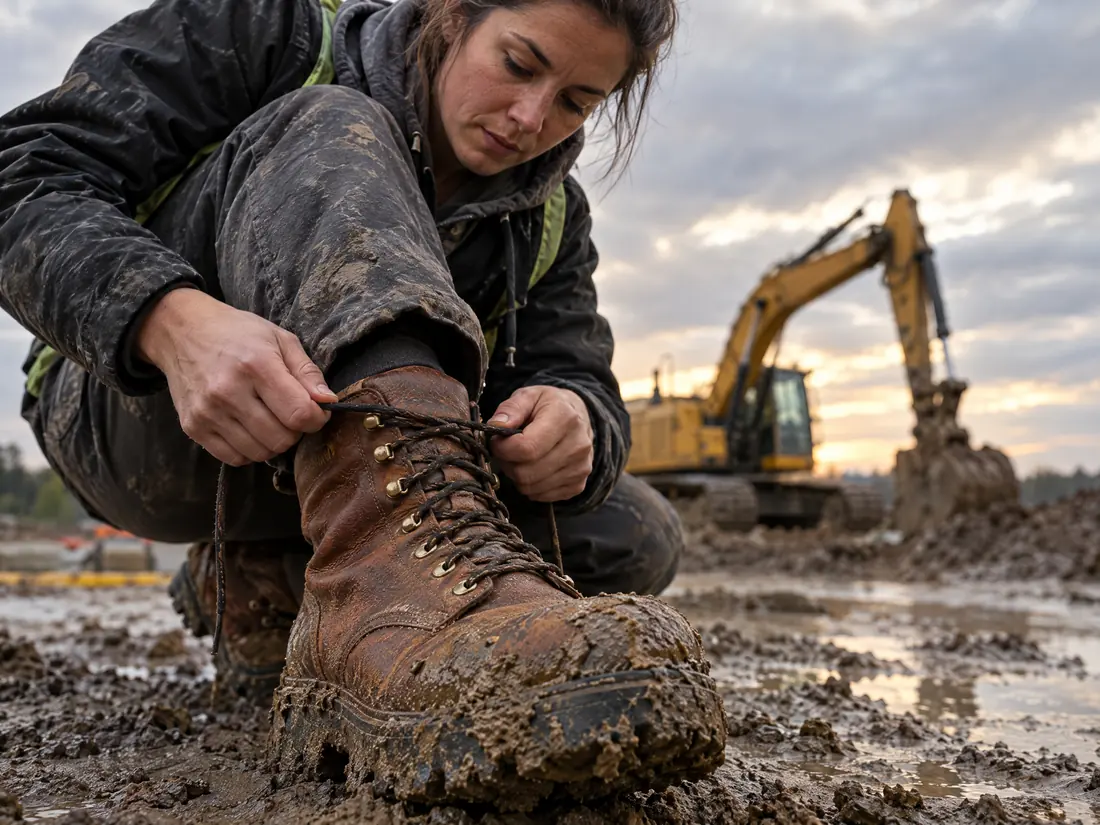
A safety boot wraps the ankle as well as the foot, reducing the risk of twisting on uneven ground. It is the common choice for construction, mining and open sites.
- Main group
- Foot protection
- Product types
- 6
- Standards
- EN ISO 20345
- Industries
- 3
Ankle support makes a clear difference for crews on broken ground. A boot also stops trouser hems from riding in, reducing the entry of hot particles and swarf.
In winter models, lining and sole insulation matter; on cold ground most heat is lost through the sole.
The ankle support of a boot is the reason to choose it over a shoe. On uneven ground, scaffolding and excavation work, a higher shaft reduces ankle roll. The trade-off is heat and weight, so a boot should not be specified for flat indoor floors out of habit.
Lacing type is a practical detail that decides daily comfort. Speed hooks are quick to fasten and release but catch on obstacles; closed eyelets are slower but safer in confined spaces. Pick to suit the environment, not the catalogue.
Products in this group
- High cut with ankle support
- Steel and composite toe
- Penetration-resistant midsole option
- Insulated winter lining
- Speed lacing with double eyelets
Related standards
1 Standard
EN ISO 20345
Safety footwear (200 J toe protection)
Products in this group
06- Steel toe safety boot
- Composite toe boot
- Winter safety boot
- HRO sole boot
- Construction boot
- Occupational boot without toe cap
Related product groups
Foot protection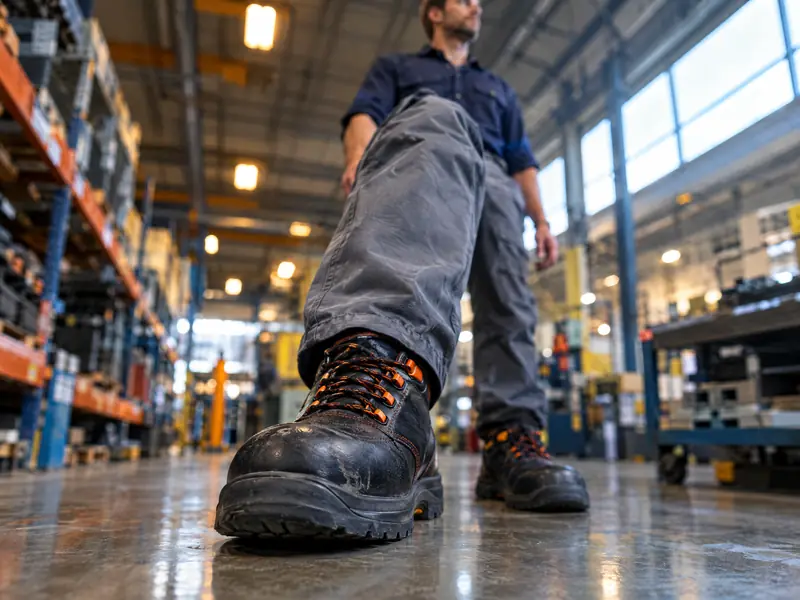


Frequently asked questions
Boot or shoe?
Boots suit uneven, muddy sites and places with swarf risk; shoes are more comfortable for flat indoor work. Most companies supply both.
Is a waterproof membrane always useful?
In wet and cold conditions, yes. In hot and dry environments it traps heat and the foot sweats, so a breathable unlined boot is more comfortable. Two versions for summer and winter is the common answer.
Can the sole be resoled?
On cemented and stitched constructions, sometimes. On direct-injected soles it is not practical. If long service life matters, the construction should be part of the specification.
Why choose a boot over a shoe?
Ankle support. On uneven ground, scaffolding and excavation work a higher shaft reduces ankle roll; the trade-off is heat and weight, so boots should not be specified by habit for flat indoor floors.
Is a waterproof membrane always useful?
In wet and cold conditions, yes. In hot dry environments it traps heat and the foot sweats, so an unlined breathable boot is more comfortable. Two seasonal versions is the common answer.
Request a quote for this group
Tell us your headcount, the hazards on site and your delivery schedule; we will work out the fabric options, branding and pricing together.
Currently for corporate supply and wholesale custom production; retail coming soon.
Quote request
Fill in the form and we will come back to you the same working day. You can also reach us on WhatsApp.