How to read a care label
Care symbols follow ISO 3758:2023 and always appear in the same order: washing, bleaching, drying, ironing, professional cleaning. Each one shows the most severe treatment the garment can take without irreversible damage. A 60 in the washtub means 40 °C is fine; 70 °C is not.
Protective clothing adds a line of its own. A figure such as ‘max. 25x’ on hi-vis means the garment was tested and still met its standard after 25 washes. Garments bound for an industrial laundry need a different set of symbols: ISO 3758 does not cover industrial laundering, whose symbols are defined in ISO 30023:2021.
The bars under the tub describe mechanical action. A plain tub calls for a normal cycle, one bar for a mild cycle with less agitation, two bars for a very mild one; on most machines those three levels correspond to the cotton, synthetics and wool programmes. The 2023 edition redrew the hand-wash, do-not-wash, do-not-bleach and do-not-iron symbols to match those of GINETEX, the international care-labelling association, and added new symbols for hand washing at ambient temperature and for ironing without steam.
| Symbol | What you see | What it means |
|---|---|---|
| Washtub | A number such as 30, 40 or 60 | Maximum washing temperature in °C; a lower temperature is fine |
| Bar under the tub | One bar or two bars | One bar: mild cycle with reduced mechanical action; two bars: very mild cycle |
| Hand wash, do not wash | A hand in the tub; a crossed-out tub | Hand wash only, at no more than 40 °C; do not wash in water |
| Triangle | Empty; two diagonal lines inside; crossed out | Any bleach; oxygen (non-chlorine) bleach only; no bleach |
| Circle in a square | One dot, two dots or a cross | Tumble dry on low heat; on normal heat; do not tumble dry |
| Lines in a square | A vertical or horizontal line; a diagonal mark in the corner | Natural drying: vertical line for hanging, horizontal line for drying flat; the corner mark for drying in the shade |
| Iron | One, two or three dots; a cross | Low, medium or high heat; do not iron |
| Circle | P, F or W inside; a bar beneath; a cross | P and F show which dry-cleaning solvents may be used, W professional wet cleaning; a bar means a milder process, a cross means not at all |
What temperature and cycle should workwear be washed on?
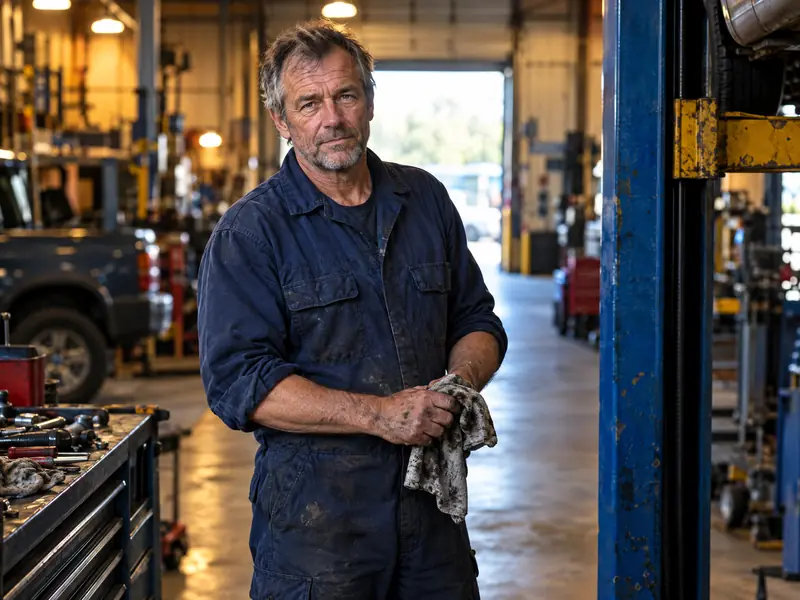
On temperature, the only rule is the number on the label. Going by fabric name alone misleads, because the same polyester-cotton twill can carry a lower limit once reflective tape or a print is added. The labels do follow a pattern, though. Polyester-cotton work trousers, jackets and coveralls are mostly rated to 60 °C, and the same labels usually rule out bleach. Hi-vis vests tend to say 30 or 40 °C, membrane jackets and softshells 30–40 °C.
Where you sit under that limit depends on the dirt. A maintenance coverall heavy with grease goes in at the highest temperature the label allows. After a dusty but dry shift, a lower setting often does the job and is easier on the fabric, the tape and any print; tape manufacturers state that washing below 60 °C extends tape life. Hygiene garments are a different calculation. On a white apron from a food line, the job of temperature is to remove micro-organisms as well as dirt, and NHS England's 2020 uniform guidance says a ten-minute wash at 60 °C removes almost all of them.
The bars under the tub choose the cycle. Polyester-cotton trousers with a plain tub go on a normal cycle; a hi-vis vest or softshell with one bar goes on a synthetics or delicate cycle that tumbles less. Don't pack the drum: the same NHS guidance notes that overloading reduces wash efficiency. For heavy soil or hard water, dose the detergent to the heavy-soil line on the pack.
Empty the pockets first: screws, pens and lighters have no business in a drum. Close zips and hook-and-loop tabs and turn the garment inside out, which spares prints, embroidery and reflective tape the worst of the friction.
Use a tumble dryer only when the label shows a circle in a square with no cross through it; the dots inside set the heat. Taking garments out slightly damp, instead of running them bone dry, means less shrinkage and less wear on the tape. Ironing follows its own dots. Never put the iron straight onto reflective tape, a print or a heat-applied badge: use a pressing cloth and no steam.
The table collects values that come up often on workwear labels; an individual product can carry a lower limit.
| Garment | Common upper limit and cycle | Avoid |
|---|---|---|
| Polyester-cotton trousers, jackets, coveralls | 60 °C, normal (coloureds) cycle; darks separately; inside out where possible | Bleach (most of these labels rule it out), an overloaded drum, high-heat drying |
| White aprons, chef jackets, food-line garments | 60 °C, higher if the label allows; cotton cycle | Dropping to a lukewarm cycle; coloured trims that can't take the heat |
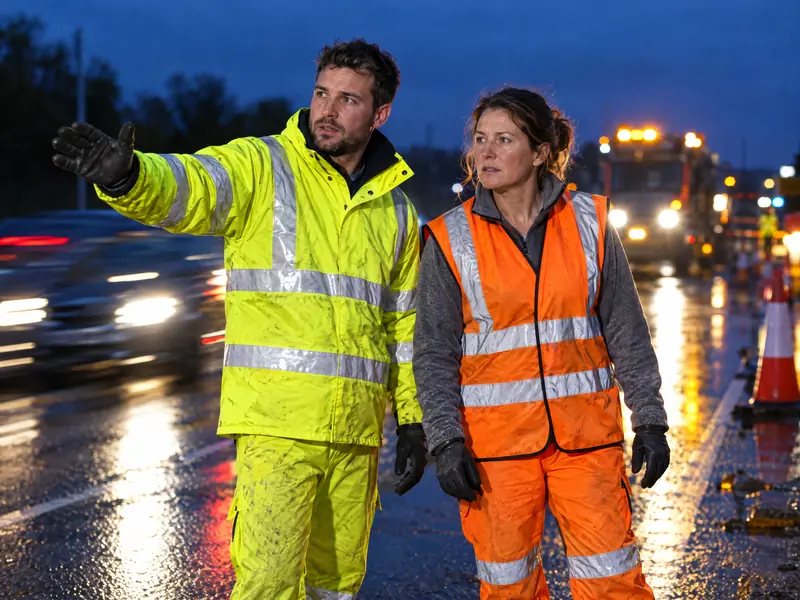
| Hi-vis vest | 30–40 °C, mild cycle, inside out; the ‘max. …x’ wash limit on the label | Fabric softener, bleach, high-alkaline detergent, pre-soaking, an iron directly on the tape, overdrying |
| Flame-resistant (FR) clothing | The label maximum (60 °C is common); separately and inside out; up to that limit for heavy soil | Softener, chlorine bleach, hydrogen peroxide and ‘oxygen’ stain removers, starch; oil or solvent left in the fabric |
| Antistatic and ESD garments | ESD smocks mostly 30–40 °C, mild cycle; thorough rinsing; low-heat drying | Softener unless the label allows it, bleach, high-heat drying |
| Membrane jackets, rainwear, softshell | 30–40 °C, mild cycle, low spin, liquid detergent, second rinse | Powder detergent, softener, stain remover, bleach, high-heat drying |
| Disposable chemical coverall (Type 5/6) | Not washed; disposed of after use | Washing it and wearing it again |
| Safety shoes and boots | No machine wash unless the manufacturer allows it; brush and damp cloth; insole out, dry at room temperature | Radiators, stoves and direct heat; the washing machine |
Oil, grease, paint, concrete and blood: before the machine
Treating a stain before the wash is easier than chasing it afterwards. One rule applies to every stain: don't put the garment in the dryer until you're sure the mark has gone, because heat can fix whatever is left.
Oil and grease call for liquid detergent. On a light mark, work it straight into the stain. On a heavy one, lay the garment stain-side down on clean paper towels, apply detergent to the back of the fabric, let the area dry and change the towels often. Then wash at the hottest temperature the label allows. That is the sequence Mississippi State University Extension recommends in its stain guidance.
With paint, timing decides. Water-based paint rinses out in warm water while it is still wet; once it has dried it generally won't come out. For oil-based paint, use the thinner named on the tin, or turpentine if none is given. Work somewhere well ventilated and away from anything that could ignite the solvent, then rinse, pre-treat with detergent and wash. On FR clothing, solvent or oil left in the fabric means another wash, and withdrawal if it still won't come out.
Concrete brings two separate problems. Clothing soaked with wet concrete or mortar is a health issue first. HSE puts wet cement at pH 12–13 and warns that it can cause severe burns, and Washington State's Department of Labor & Industries tells workers to remove clothing contaminated by wet concrete immediately. Dried mortar is the laundry problem: brush or scrape it off before the garment goes in, then wash as usual.
Never start a blood stain with hot water. Soak a fresh stain in cold water for about half an hour, work detergent into what remains, rinse and wash. If a mark still shows, rewash with a bleach the label permits. On hi-vis or FR clothing whose label rules out bleach, skip that last step.
At home or at the laundry: washing separately, and clothing that never goes home
Heavily soiled workwear doesn't share a drum with household laundry. The NHS guidance gives two reasons: separate washing avoids cross-contamination and lets the garment go in at the highest recommended temperature. NIOSH, the US National Institute for Occupational Safety and Health, goes further and advises changing clothes and shoes before leaving work, keeping dirty work clothes away from clean ones and washing them separately from the family's laundry. It lists lead, pesticides, beryllium and asbestos among the substances carried home this way.
Workwear sent to an industrial laundry or a rental service goes through harsher conditions. The laboratory equivalent of a domestic wash is ISO 6330:2021; for industrial laundering it is ISO 15797:2017, which defines eight washing procedures and two drying procedures, one of them tunnel or cabinet finishing. Some of those washing procedures run at 75 °C. Whether a garment is fit for that cycle is shown on the label by ISO 30023 symbols; domestic care symbols don't answer the question.
In industrial laundering the weak point is usually a detail rather than the fabric: a heat-applied badge, reflective tape chosen for domestic washing, the wrong thread. When you ask Formasan for a quote, saying whether the garments will be washed at home or by a laundry, and roughly how many washes a year they will see, means the fabric, tape and logo method can be chosen to match.
Upkeep is a legal duty. Under Directive 89/656/EEC the employer provides PPE free of charge and keeps it in good working order and hygienic condition. In Great Britain, regulation 7 of the PPE at Work Regulations 1992 requires PPE to be maintained, cleaning or replacement included; in the US, 29 CFR 1910.132(a) requires it to be kept in a sanitary and reliable condition. Hi-vis, FR and EN 1149-5 antistatic garments are PPE; ordinary work clothes and uniforms not designed to protect are not. On your own site, the risk assessment and a competent health and safety adviser have the final say.
For some garments, even washing separately is not enough. Cleaning becomes the employer's or an equipped laundry's job, and some garments are not washed at all:
- Protective clothing from asbestos work does not go home. In Great Britain, regulation 14 of the Control of Asbestos Regulations 2012 requires it to be disposed of as asbestos waste or cleaned, either on suitably equipped premises where the exposure happened or at a suitably equipped laundry, and packed in a suitable labelled container before it leaves those premises.
- Where carcinogens or mutagens can contaminate clothing, Article 10 of Directive 2004/37/EC applies: protective clothing is stored apart from street clothes, protective equipment is checked and cleaned after every use, and workers may not be charged for any of it.
- For lead work, HSE is blunt: protective clothing and footwear are not taken home for washing or cleaning.
- Pesticide-contaminated PPE falls under the US EPA's Worker Protection Standard (40 CFR 170.507), which sets three limits. Coveralls and other absorbent items drenched or heavily contaminated with a pesticide labelled DANGER or WARNING are not reused but disposed of. Other contaminated PPE is washed separately from any other clothing or laundry. And employers may not let handlers wear or take contaminated PPE home.
- Disposable Type 5/6 chemical coveralls are not washed at all. Manufacturers describe them as single-use and warn against reuse; one points out that laundering also strips the antistatic treatment and impairs protection. A used coverall is disposed of according to what contaminated it and local rules.
How to wash a hi-vis vest
Hi-vis clothing stops doing its job as it gets dirty. Fluorescent fabric dulls under a film of grime, and tape under a layer of mud sends far less of a headlight beam back towards the vehicle. That is why manufacturers' user information asks for the garment to be cleaned when soiled. Putting off the wash does not protect the tape.
A figure such as ‘max. 25x’ or ‘max. 50x’ on the label means the garment was tested to EN ISO 20471:2013+A1:2016 after that many washes. With no figure, it was tested after five. The number is a tested ceiling, not a service life: sunlight, abrasion and poor storage can finish a garment sooner.
A routine that works: turn the vest inside out, close the zip, and wash it on its own or only with other hi-vis garments. Stay within the label temperature, which on polyester vests is usually 30 or 40 °C. Pick a colour detergent without bleaching agents and leave out the fabric softener. Heavy-duty, high-alkaline detergents and pre-soaking wear the tape too; tape makers warn against wash liquor above pH 11. Rinse thoroughly so no detergent residue stays on the tape.
Line drying comes first, in the shade, since fluorescent colour fades in sunlight. Use a tumble dryer only if the label allows it, on low heat, and take the vest out while it is slightly damp. Keep the iron off the tape: use a pressing cloth and no steam. Once the tape has faded to a dull, matt finish, replace the vest, even if the wash count has not been reached; tape that cracks or lifts at the edges calls for the same decision.
Let's choose the right product for your team
Tell us the site conditions, quantity and the standard you need; we come back with fabric, model and sample options.
How to wash flame-resistant (FR) clothing
Washing FR clothing has two jobs: getting flammable soil out of the fabric and leaving the flame resistance intact.
The soil is not a cosmetic issue. OSHA's guidance for electric power work says FR clothing contaminated with grease, oil, solvents or other flammable substances should not be used, because the contamination greatly reduces the effectiveness of the material; the garment is either cleaned thoroughly or replaced. In the machine, FR clothing goes in inside out, apart from everyday laundry and with room in the drum; for heavy soil, use the highest temperature the label allows. Then check that the soil has actually gone. If home washing won't shift it, ASTM F2757 points to alternatives such as an industrial laundry, dry cleaning or disposable FR coveralls. Industrial laundering has its own guide, ASTM F1449.
The second job depends on the fabric. In inherent FR fabric, flame resistance comes from the fibre itself and does not wash out; wear, thinning and tears end the garment's life. In treated FR fabric, protection comes from a durable finish bonded to the fibres, and the wrong chemistry can weaken it. In a study a US test laboratory published in ASTM's protective clothing series, chlorine bleach disabled the FR treatment of a common cotton-nylon fabric somewhere between 50 and 100 washes in soft water.
ASTM F2757, the US guide to home laundering of flame-resistant and arc-rated clothing, lists what stays out of the wash: chlorine bleach, hydrogen peroxide, starch, fabric softener, and detergents or pre-treatment products that contain them. Stain removers sold as ‘oxygen’ products fall into the same group unless the label specifically allows them, since ISO 3758 defines oxygen bleach as an agent that releases a peroxygen species in solution, with sodium percarbonate and hydrogen peroxide as examples.
Repairs are part of the care. OSHA notes that torn FR clothing often needs special repair techniques and that common nylon thread can reduce its FR protection. A garment with holes, thin patches or open seams stays out of use until it is repaired or replaced.
Antistatic and ESD garments: the fabric softener question
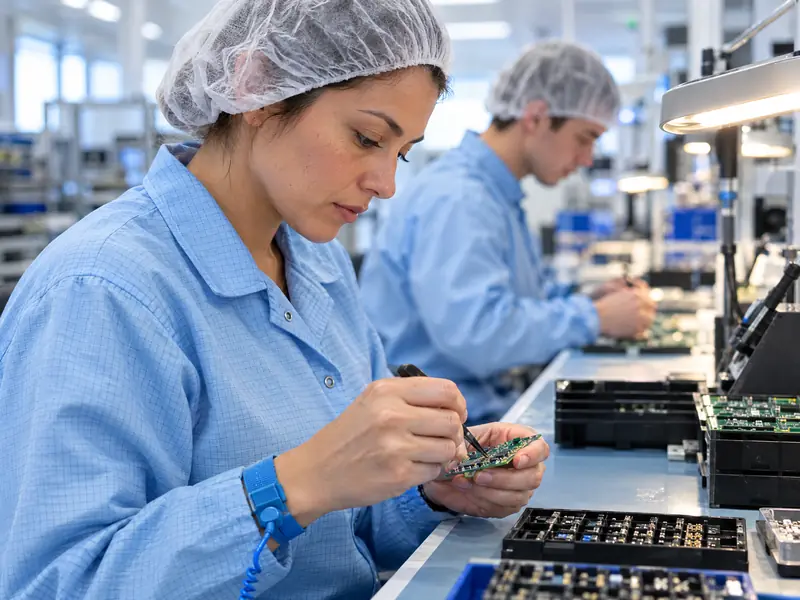
In antistatic and ESD garments, protection comes from conductive fibre woven into the fabric. It is a small share of the cloth: one ESD smock on the market uses 2 % conductive fibre, laid out as a 5 mm grid. The fibre doesn't wash out, but it can get coated. The ESD Association's handbook, ESD TR20.20, recommends regular laundering to the manufacturer's instructions for exactly that reason: to stop the conductive fibre becoming contaminated and insulative. The same text says thorough rinsing helps prevent chemical build-up on the fibres, while drying at high temperatures may degrade them.
On fabric softener, manufacturers disagree. Some ESD garment makers ban both softener and bleach outright; others' smock instructions allow non-ionic softeners only. If the label doesn't permit softener, leave it out. Bleach is generally excluded by these garments' instructions altogether.
Temperatures stay low too. ESD smocks for electronics assembly lines are usually labelled 30–40 °C on a gentle cycle; antistatic coveralls combined with FR can go up to 60 °C. Whether a wash has worked can't be seen, so garment resistance is measured at the interval set in the site's verification plan; the ESD Association's test method for garments is ANSI/ESD STM2.1.
How to wash a work jacket or softshell
‘Work jacket’ covers several products, and they don't all wash the same way. A woven polyester-cotton work jacket follows the same rules as trousers. A hi-vis jacket is washed like a hi-vis vest. The ones that need care are waterproof membrane jackets, rainwear and softshells.
With a membrane jacket, detergent residue is as much of a problem as dirt. Membrane care instructions typically say: close zips and pockets; wash at 40 °C with a small amount of liquid detergent on a gentle cycle with a low spin; no powder detergent, fabric softener, stain remover or bleach; and a second rinse so all the detergent goes. Keep the jacket out of a load of heavily soiled laundry. Line dry it, or tumble on a warm, gentle setting, never on high heat.
Softshell labels commonly say 30 or 40 °C. Leave out fabric softener, which compromises the fabric's performance, and use a liquid detergent, since powder can clog the pores and cut breathability. Manufacturers differ on drying. Some prefer a line or a drying cabinet because a tumble dryer adds wear; others suggest a round on low heat to revive the water-repellent finish. The label decides.
The water-repellent finish on the outer fabric weakens over time, and heat is the first fix: once the jacket is dry, give it about 20 more minutes in the tumble dryer, or iron it on a gentle setting without steam, with a towel in between. If water still spreads into the fabric instead of beading and running off, renew the finish with a spray-on or wash-in repellent and tumble dry for another 20 minutes to activate it. The finish protects only the outer fabric; the membrane is a separate layer.
In padded winter jackets, the filling can clump in the wash. Stay with the cycle on the label and don't put the jacket away until the filling is completely dry.
How to clean safety boots and shoes
Safety footwear is cleaned, not washed. Some manufacturers explicitly rule out the washing machine in their user information. Unless the instructions allow machine washing, a steel or composite toe cap makes no difference: the boot stays out of the machine.
Dry wet footwear at room temperature; one manufacturer gives 30 °C as the upper limit. Newspaper stuffed inside draws out the moisture. A radiator, stove or heater is not a drying rack: user instructions state that wet shoes must not go over a heat source, and heat can distort the shape.
Against odour, the first measure is taking the insole out every day so it dries; when needed, hand wash it with mild detergent and dry it at room temperature. If it needs replacing, choose the model the manufacturer recommends. Safety footwear is certified together with its insole, and a different insole can change certified properties, antistatic or ESD performance included.
Day-to-day cleaning depends on the upper:
- Leather uppers: brush off dirt after each use or wipe with a damp cloth. Feed the leather regularly with a care cream or polish, backed up by a protective spray.
- Textile uppers: brush off dry dirt with a soft brush and wipe stains with a lightly damp cloth and a little mild detergent.
- Nubuck and suede: use a soft brush or a suede brush, and apply a protective impregnating product before first use.
- Synthetic leather and microfibre: no protective spray or shoe polish; a damp cloth is enough.
Standards and regulations referenced
- ISO 3758:2023
- ISO 30023:2021
- ISO 15797:2017
- ISO 6330:2021
- EN ISO 20471:2013+A1:2016
- EN 1149-5:2018
- ESD TR20.20-2008 (EOS/ESD Association handbook)
- ANSI/ESD STM2.1
- ASTM F2757
- ASTM F1449
- EN ISO 20345:2022
- Kişisel Koruyucu Donanımların İşyerlerinde Kullanılması Hakkında Yönetmelik (RG 02.07.2013, 28695)
- Asbestle Çalışmalarda Sağlık ve Güvenlik Önlemleri Hakkında Yönetmelik (RG 25.01.2013, 28539)
- Kanserojen veya Mutajen Maddelerle Çalışmalarda Sağlık ve Güvenlik Önlemleri Hakkında Yönetmelik (RG 06.08.2013, 28730)
- Directive 89/656/EEC (as amended by Directive (EU) 2019/1832)
- Directive 2004/37/EC, Article 10
- Personal Protective Equipment at Work Regulations 1992 (SI 1992/2966), regulation 7
- Control of Asbestos Regulations 2012 (SI 2012/632), regulation 14
- 29 CFR 1910.132
- 40 CFR 170.507 (EPA Worker Protection Standard)
- OSHA Electric Power eTool: Best Practices for Arc Exposures and Use of FR Clothing
- HSE, Lead at work guidance (hse.gov.uk/lead)
- HSE, Construction FAQ on skin (cement burns)
- NIOSH, About Take-Home Exposures
- NHS England, Uniforms and workwear: guidance for NHS employers (2 April 2020)
- Mississippi State University Extension Service, How to Remove Pesky Stains
- Washington State Department of Labor & Industries, SHARP: Worker severely burned by wet concrete (April 2009)
- ASTM STP1593, Performance of Protective Clothing and Equipment: 10th Volume (bleach and fabric softener on FR cotton-nylon fabric)