
Workwear or PPE: the line that decides the duty
All three systems draw the same line. Directive 89/656/EEC leaves out ‘ordinary working clothes and uniforms not specifically designed to protect the safety and health of the worker’ (Article 2(2)(a)), and Great Britain's regulations use almost the same words (regulation 3(2)(a)). HSE's guidance on those regulations, known as L25, names three things that fall outside: uniforms provided mainly to present a corporate image, ordinary working clothes, and clothing worn in the food industry mainly for food hygiene. The British definition of PPE also states that it includes clothing affording protection against the weather.
A garment crosses the line when it protects against a defined risk. HSE's example is high-visibility clothing, and its guidance treats weatherproof or insulated clothing as PPE when it is worn to protect workers against a risk to their health or safety. In a cold store, then, the dispatch team's logo polo is a uniform, while the insulated jacket of the person who works inside the freezer is PPE. The US standard, 29 CFR 1910.132(a), lists protective clothing among the equipment that must be provided, but its payment rule leaves out everyday clothing and items worn only against the weather, such as winter coats and raincoats (1910.132(h)(4)).
The table sets out six common situations and what follows from each:
| Situation | Who provides and pays | How frequency is set | Legal basis |
|---|---|---|---|
| PPE in the EU: safety footwear, helmets, gloves, hi-vis, protective clothing | Employer, free of charge; national law may allow a worker contribution only for items also used outside work | Seriousness of the risk, frequency of exposure, the workstation and the performance of the PPE | Directive 89/656/EEC, Art. 4(3) and 4(6) |
| PPE in Great Britain, for employees and, since 6 April 2022, limb (b) workers | Employer; no charge for the item, its storage, maintenance, replacement or training | Maintained, cleaned and replaced as appropriate; replaced at the end of its usable life or when not worth repairing | PPE at Work Regulations 1992, regs 3A, 4 and 7; HSWA 1974, s. 9; HSE L25 |
| PPE in the US | Employer, at no cost to employees | Kept sanitary and reliable; defective or damaged PPE is not used; replacements paid unless lost or intentionally damaged | 29 CFR 1910.132(a), (e) and (h); 1926.95(d) in construction |
| US non-specialty safety-toe footwear and prescription safety eyewear | Employee may pay, if the employer allows the items to be worn off the job site | Taken out of use once defective or damaged; the employer stays responsible for their adequacy and upkeep | 29 CFR 1910.132(b), (e) and (h)(2) |
| Ordinary workwear or corporate uniform | Whoever the contract or policy names; PPE rules do not cover it, but wage-deduction rules still do | Contract, collective agreement or dress code | Directive 89/656/EEC, Art. 2(2)(a); PPE at Work Regulations 1992, reg. 3(2)(a); 29 CFR 1910.132(h)(4)(ii) |
| Food hygiene clothing | Not set by the rules; the food business operator (EU) or establishment management (US) must ensure compliance | Kept clean and suitable for the operation under the site's hygiene procedures | Regulation (EC) No 852/2004, Art. 3 and Annex II, Ch. VIII; 21 CFR 117.10 |
What the employer must do once PPE is needed
Article 3 of the directive allows PPE only where risks cannot be avoided or sufficiently limited by collective technical protection or by the way work is organised, and HSE's guidance calls it the last resort. At a stone-cutting bench, wet cutting or dust extraction is considered first; the respirator deals with what remains.
The assessment has to stay current. In Great Britain the PPE assessment is reviewed when there is reason to suspect it is no longer valid or when there has been a significant change (regulation 6(3)), and the directive requires a review whenever any of its elements changes (Article 5(2)). In the US the hazard assessment, which under 1910.132(g) covers eye, face, head, foot, hand and fall protection, must be certified in writing, naming the workplace evaluated, the person certifying and the date (1910.132(d)(2)).
Coverage changed in Great Britain on 6 April 2022, when the duties were extended beyond employees to limb (b) workers: people who personally do work under a contract without running a business of their own (SI 2022/8). HSE describes their working arrangements as generally casual or irregular.
With the need established, the duties line up closely across the three systems:
- Choose for the hazard and for the wearer: take account of ergonomics and the person's state of health, and make sure the item fits after adjustment (Art. 4(1); reg. 4(3); 1910.132(d)(1)(iii)).
- Issue it free of charge (Art. 4(6); HSWA s. 9, extended to limb (b) workers by reg. 3A; 1910.132(h)(1)).
- Explain which risk it protects against and train people in wearing it; in the US, retrain anyone whose use shows the training did not stick (Art. 4(7) and 4(8); reg. 9; 1910.132(f)).
- Keep it in good working order and hygienic condition through maintenance, repair and replacement (Art. 4(6); reg. 7; 1910.132(a)).
- Provide somewhere to store it when it is not in use (reg. 8).
- Make it readily available, with clear instructions on where workers can get it (L25, paragraph 30).
- Consult the people who will wear it (Art. 8). HSE adds that PPE accepted by its wearers stands a better chance of being used effectively.
How often should PPE and workwear be replaced?
None of the three systems sets a calendar. The directive ties the period for which PPE is worn to the seriousness of the risk, the frequency of exposure, the characteristics of each workstation and the performance of the equipment (Article 4(3)). British law requires PPE to be maintained, ‘including replaced or cleaned as appropriate’, in an efficient state, in efficient working order and in good repair (regulation 7). OSHA requires it to be kept in a sanitary and reliable condition and bars defective or damaged PPE from use (1910.132(a) and (e)).
HSE's guidance turns that into practice. PPE has a usable shelf life and should be replaced once that is exceeded, or when it is so badly damaged that repair is impossible or not worth the cost. Who maintains it, by what procedure and how often should be written down, following the manufacturer's maintenance schedules (L25, paragraphs 62 and 65).
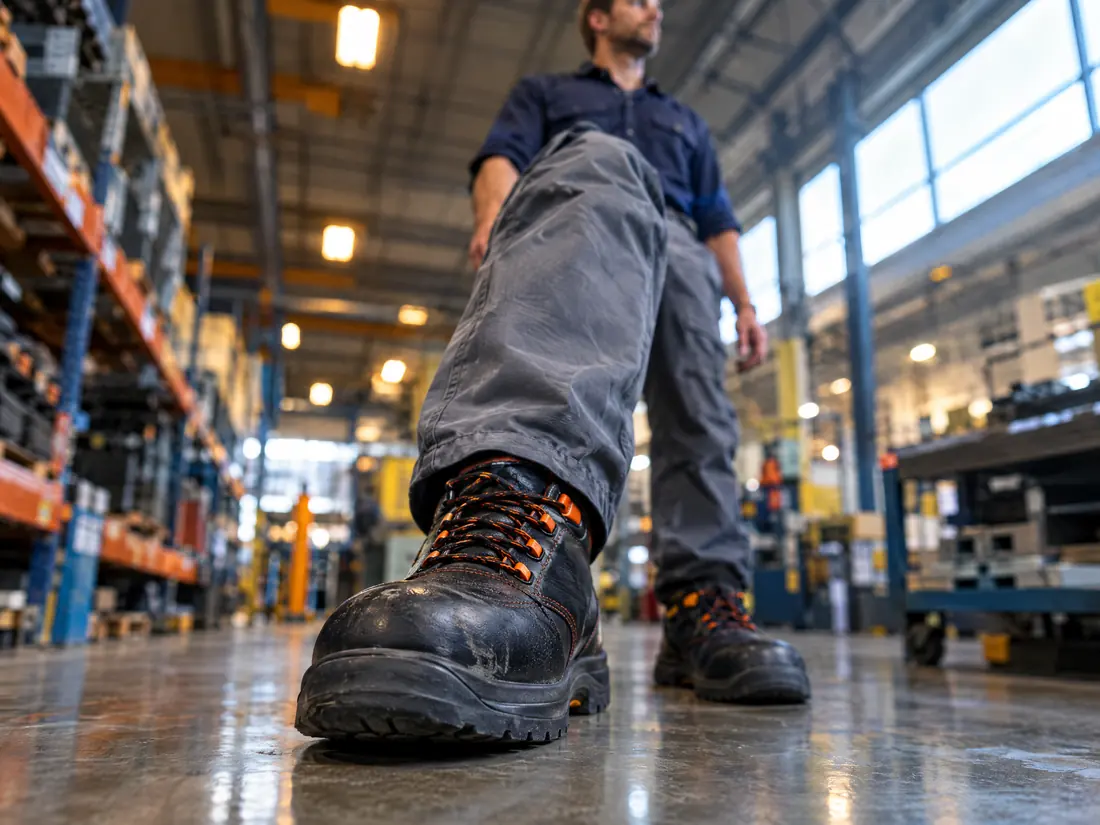
The same S3 boot lives a very different life on a demolition site full of rubble and on a dry packing line, so a fixed date either throws out sound boots or keeps failed ones in service. Footwear made to EN ISO 20345:2022 is marked with at least the year and month of manufacture, so the age of a pair that has sat in a store can be read off the boot. On hi-vis, a care label such as ‘max 25x’ states a maximum number of cleaning cycles; if the tape is peeling before then, the garment goes anyway.
Fixed numbers, where they exist, come from contracts or company policy. A collective agreement, an employment contract or a uniform policy may promise so many shirts or pairs of boots a year. That number is an entitlement, not a ceiling: if boots issued under a once-a-year clause split in month four, the replacement duty in the PPE rules still applies. Quantities matter as well. For dirty work, a second set lets one be washed while the other is worn, and the budget works better as supply through the year than as a one-off purchase.
When ordinary workwear or a uniform is compulsory
Outside the PPE rules, a dress code is a matter for the contract and the workplace. Whether staff must wear a uniform at a hotel reception or a logo shirt on a shop floor is set by the employment contract, the staff handbook or a collective agreement. Writing the rule down, together with who pays and how many items each person gets, heads off disputes later.
Food law is the main sector-specific source. In the EU, everyone working in a food-handling area must maintain a high degree of personal cleanliness and wear suitable, clean and, where necessary, protective clothing (Regulation (EC) No 852/2004, Annex II, Chapter VIII), and food business operators must ensure that the hygiene requirements are met (Article 3). In the US, 21 CFR 117.10 puts the duty on the management of the establishment and asks for outer garments suitable to the operation, worn so as to protect against allergen cross-contact and contamination of food. This clothing protects the product, which is why HSE's guidance keeps food hygiene clothing outside the PPE regulations.
In a meat plant the hygiene coat comes from food law, while the safety boots on the same worker are PPE, and so is the insulated suit worn in the blast freezer. Splitting an order along that line shows straight away which items need PPE documentation and which only need to survive hot washes.
Cost follows the same split. For PPE the answer is fixed: it is free. For a corporate uniform the PPE rules say nothing, and OSHA's payment rule expressly excludes everyday clothing from what employers must pay for (1910.132(h)(4)(ii)). Who pays is then a question for the contract or company policy, within wage law. In Great Britain a deduction from pay needs a contractual term or the worker's prior written consent (Employment Rights Act 1996, s. 13), and a uniform the worker pays for counts against minimum-wage pay. In the US the cost of a required uniform may not take pay below the federal minimum wage or cut into overtime (Fair Labor Standards Act).
Let's choose the right product for your team
Tell us the site conditions, quantity and the standard you need; we come back with fabric, model and sample options.
Do workers have to wear it?
Where it is PPE, yes. The EU framework directive requires workers to make correct use of the PPE supplied to them and, after use, return it to its proper place (Directive 89/391/EEC, Article 13(2)(b)). In Great Britain every worker must use the PPE provided in line with their training and instructions, return it to its storage after use and report any loss or obvious defect (regulations 10 and 11). The US OSH Act requires each employee to comply with the standards that apply to their own actions and conduct (section 5(b)).
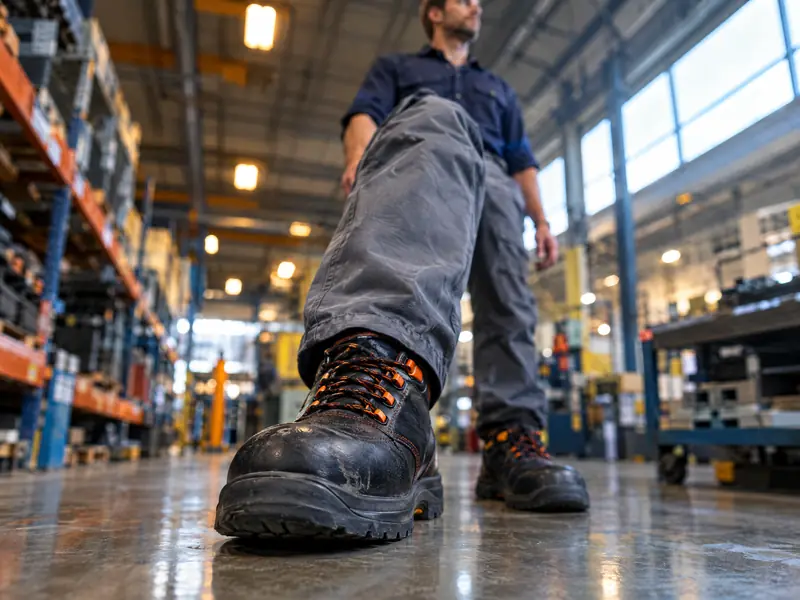
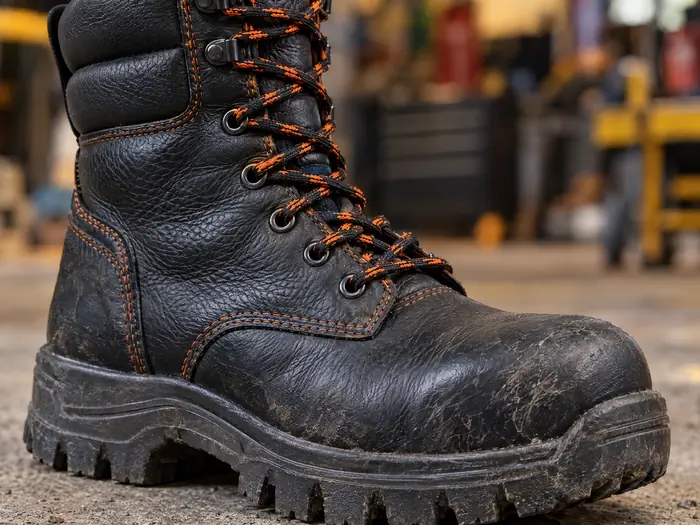
Safety boots follow the risk assessment. OSHA requires protective footwear where there is a danger of foot injury from falling or rolling objects or objects piercing the sole, or where it protects against an electrical hazard that remains after other measures (1910.136(a)). HSE's guidance makes the same point from the other side: most workplaces carry some risk of people dropping objects on their feet, but safety footwear is warranted only where the objects handled are heavy enough to injure the feet. In a typical office that threshold is rarely reached.
The employer, for its part, must take all reasonable steps to ensure that PPE is properly used (regulation 10(1)), and the US rules require the employer to have each affected employee use the PPE selected (1910.132(d)(1)(i); for footwear, 1910.136(a)). HSE suggests spot checks to see how well PPE is being used, with corrective action where misuse shows up.
When the employer is not providing PPE, the first step is to raise it with the supervisor or safety representative, in writing if possible. In the EU, workers may appeal to the national authority responsible for safety and health at work if they consider the employer's measures inadequate (Directive 89/391/EEC, Article 11(6)). In England, Scotland and Wales, HSE takes reports of workplace health and safety issues online, although for some premises the local council is the enforcing authority. Section 44 of the Employment Rights Act 1996 protects employees from detriment for raising health and safety concerns in the ways it sets out. In the US, workers or their representatives can file a confidential complaint and request an OSHA inspection, and employers must not retaliate against them for raising hazards.
When a worker refuses to wear PPE
Start with the reason. A boot left unlaced, glasses pushed up on the forehead or gloves taken off for fine work can point to a product problem: the size is wrong, the boot is heavy, the lens fogs, the glove does not grip. HSE's guidance notes that uncomfortable equipment is unlikely to be worn properly and that the people who do the job should be involved in choosing it (L25, paragraphs 39 and 40). If the product is the problem, change the product.
If the product suits the job, retrain. OSHA makes this explicit: an employee whose use of assigned PPE shows they have not retained the required understanding or skill must be retrained (1910.132(f)(3)(iii)), and HSE recommends keeping records of training (L25, paragraph 74). If the breach continues, a written process protects both sides:
- A verbal reminder and a same-day demonstration of correct use.
- A dated record of the incident: time, place, the PPE not worn, the task in hand, witnesses and the worker's own account. If the worker declines to sign, that goes on the record too.
- A written warning with short refresher training, attendance recorded.
- The sanction set out in the disciplinary procedure or collective agreement.
- Dismissal, if it comes to that, is governed by national employment law rather than PPE law. For your own site, the risk assessment and a competent safety adviser should shape each step well before that point.
Workers who cannot wear standard safety footwear
The PPE rules contain no general medical exemption. HSE's guidance says there is no exemption from the regulations for disabled people: suitable PPE must be provided and worn where the risk assessment requires it, which may mean adjusting or adapting it (L25, paragraph 52). A doctor's note changes how protection is achieved. It does not remove the hazard.
The law expects PPE to fit the person. The directive and the British regulations both require it to take account of the wearer's state of health (Article 4(1)(c); regulation 4(3)(b)), and OSHA requires PPE that properly fits each affected employee (1910.132(d)(1)(iii)). HSE tells employers to keep their PPE policy flexible enough for someone with a latex allergy or a pre-existing medical condition, and to seek medical advice on whether an individual can tolerate the PPE when problems arise (paragraphs 32 and 42).
A wider fit may be enough. Where an orthopaedic insole is needed, look for one tested in combination with that boot: an untested insert can undermine the protection the boot was certified for, and manufacturers' user information asks for the antistatic properties to be rechecked with any new insole. EN ISO 20345:2022 deals with this in Annex A, which covers three routes: safety footwear fitted with customised insocks, modified safety footwear and bespoke safety footwear. HSE likewise says adaptations such as a raised sole should be made only in consultation with the manufacturer.
If no footwear works, moving the person to a task without a foot hazard is a legitimate option. Switching to occupational footwear without a toecap (EN ISO 20347) is acceptable only where the risk assessment rules out a toe hazard for that task. In the US, whatever is chosen still has to meet the footwear criteria in 1910.136(b): one of the referenced ASTM or ANSI standards, or protection the employer shows to be at least as effective.
Can the employer charge for PPE? Issue records
In the EU and Great Britain, no. The directive requires PPE to be provided free of charge, with one narrow opening: national law may provide for workers to contribute towards certain equipment whose use is not exclusive to the workplace (Article 4(6)). The framework directive adds that safety and health measures may in no circumstances involve workers in financial cost (Article 6(5)). In Great Britain, section 9 of the Health and Safety at Work etc. Act 1974 bars charging, and HSE's guidance says an employer cannot ask a worker for money for PPE ‘whether returnable or otherwise’; the rule also covers storage, maintenance, replacement, training and cleaning materials (L25, paragraphs 24, 37 and 63).
The US rule is the one with exceptions. Employers pay for PPE and for its replacement, unless the employee has lost it or intentionally damaged it (1910.132(h)(1) and (h)(5)). They need not pay for non-specialty safety-toe footwear or non-specialty prescription safety eyewear that may be worn off the job site, for shoes with built-in metatarsal protection that an employee asks to use instead of the metatarsal guards provided, for everyday clothing, or for items worn only against the weather ((h)(2) to (h)(4)). An employee may use adequate PPE of their own, but the employer cannot require them to supply or pay for it ((h)(6)). Construction follows the same rules under 1926.95(d).
No system prescribes an issue form, but a record is how an employer shows what was issued, when and with what training. HSE recommends writing down maintenance procedures and their frequency and keeping training records (L25, paragraphs 62 and 74), and OSHA requires the written hazard assessment certification. When requesting a quote from Formasan, listing the standard and class, the size split and the number of sets per person for each item lets the delivery note double as the first issue list. A workable issue record holds:
- The worker's name, role and department
- Item and model with standard and class, for example EN ISO 20345 S3, size 43
- Date of issue and quantity
- A line confirming the item was issued free and that training was given
- On replacement, the condition of the old item and the reason: wear, damage, size
- Signatures of the person issuing and the person receiving
Standards and regulations referenced
- 6331 sayılı İş Sağlığı ve Güvenliği Kanunu (RG 30.06.2012, 28339)
- Kişisel Koruyucu Donanımların İşyerlerinde Kullanılması Hakkında Yönetmelik (RG 02.07.2013, 28695)
- Kişisel Koruyucu Donanım Yönetmeliği (RG 01.05.2019, 30761)
- İş Sağlığı ve Güvenliği Risk Değerlendirmesi Yönetmeliği (RG 29.12.2012, 28512)
- 4857 sayılı İş Kanunu (RG 10.06.2003, 25134)
- 6098 sayılı Türk Borçlar Kanunu (RG 04.02.2011, 27836)
- Gıda Hijyeni Yönetmeliği (RG 17.12.2011, 28145)
- Memurlara Yapılacak Giyecek Yardımı Yönetmeliği (BKK 91/2268, RG 09.10.1991, 21016)
- Council Directive 89/656/EEC (as amended by Commission Directive (EU) 2019/1832)
- Council Directive 89/391/EEC
- Regulation (EC) No 852/2004
- Personal Protective Equipment at Work Regulations 1992 (SI 1992/2966)
- Personal Protective Equipment at Work (Amendment) Regulations 2022 (SI 2022/8)
- Health and Safety at Work etc. Act 1974, section 9
- Employment Rights Act 1996, section 44
- Employment Rights Act 1996, section 13
- HSE L25 Personal protective equipment at work, Guidance on Regulations (4th edition, 2022)
- Occupational Safety and Health Act of 1970, section 5
- 29 CFR 1910.132
- 29 CFR 1910.136
- 29 CFR 1926.95
- OSHA Temporary Worker Initiative Bulletin No. 2: Personal Protective Equipment (OSHA 3780)
- US Department of Labor, Wage and Hour Division Fact Sheet #16 (FLSA wage deductions)
- 21 CFR 117.10
- EN ISO 20345:2022
- EN ISO 20347:2022
- ILO Occupational Safety and Health Convention, 1981 (No. 155), Articles 13, 16, 19 and 21
- Code du travail (France), art. R4321-4, R4323-91, R4323-95, R4323-97, R4323-99, R4323-104, R4323-106, R4121-2
- Code du travail (France), art. L1121-1, L1251-23, L1321-1, L3121-3, L4121-2, L4122-1, L4122-2, L4131-1, L4131-3, L4624-3, L4624-6
- Cour de cassation, chambre sociale, 21 mai 2008, n° 06-44.044
- Cour de cassation, chambre sociale, 14 février 2018, n° 16-25.563
- Cour de cassation, chambre sociale, 19 juin 2013, n° 12-14.246
- Cour de cassation, chambre sociale, 14 octobre 2020, n° 18-26.829
- Трудовой кодекс Российской Федерации, ст. 73, 76, 81, 193, 214, 215, 216.1, 221, 246, 248
- Приказ Минтруда России от 29.10.2021 № 766н (Правила обеспечения работников СИЗ и смывающими средствами)
- Приказ Минтруда России от 29.10.2021 № 767н (Единые типовые нормы выдачи СИЗ и смывающих средств)
- ТР ТС 021/2011 «О безопасности пищевой продукции»
- Codex Alimentarius CXC 1-1969, General Principles of Food Hygiene