
Technical protective clothing
Chemical protective clothing
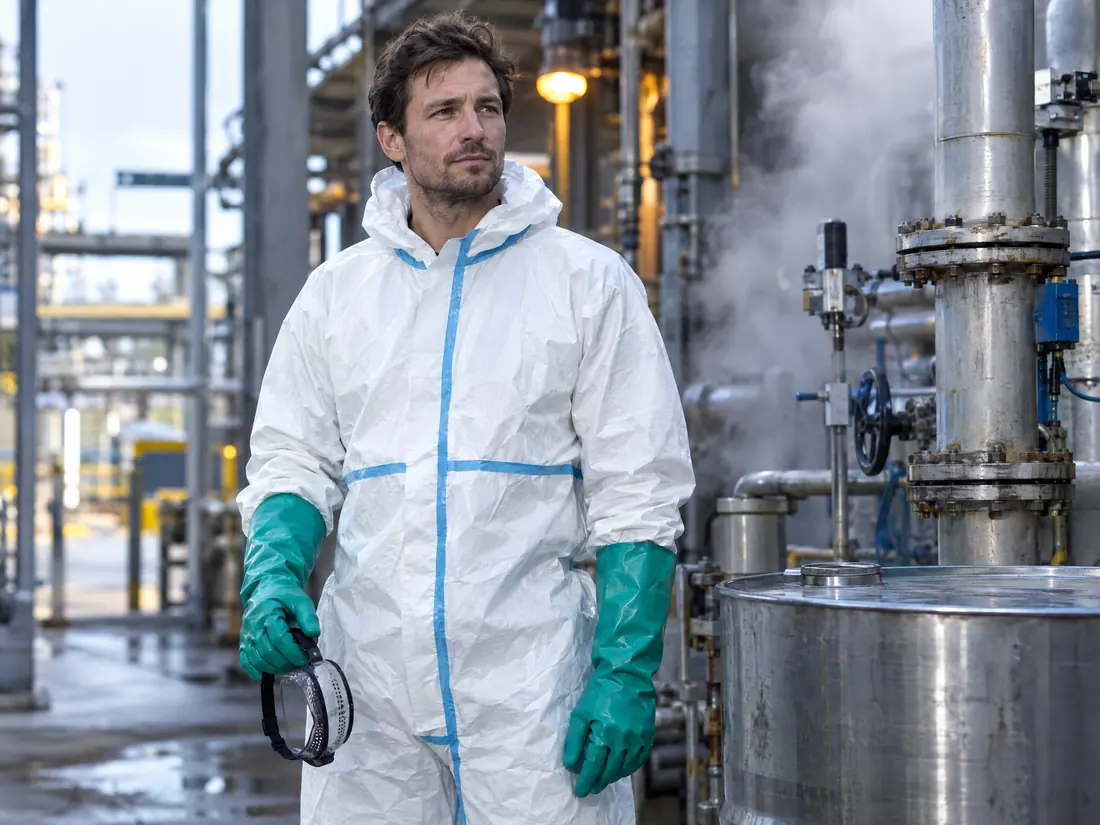
Chemical protective clothing is a barrier product that covers the body against liquid chemical splash, aerosols and particulate contamination. The type of protection is chosen against the chemical involved and the form of contact.
- Main group
- Technical protective clothing
- Product types
- 6
- Standards
- EN 13034
- Industries
- 2
Protective coveralls are classified by form of contact: different types are defined for liquid jet, heavy liquid contact, splash and dry particulate. Limited splash protection is the most common on site.
The joints matter as much as the garment itself: without taping at the wrist, the glove-to-sleeve transition, the ankle and the hood, the barrier is incomplete.
Chemical protective clothing is specified against a named substance, never in general. The same fabric that holds one solvent for hours is penetrated by another in minutes. Start from the safety data sheets of the chemicals used on site and work back to the material, thickness and type.
Removal is as important as wearing. A garment taken off incorrectly transfers the contamination on its outer surface to skin and clothing. A written removal sequence and a designated removal area are part of the protection, not an extra.
Products in this group
- Limited protection against liquid splash (Type 6)
- Disposable and reusable options
- Tapeable wrist and ankle construction
- Compatibility with gloves and respiratory protection
- Liquid-proof apron alternative
Related standards
1 Standard
EN 13034
Limited protection against liquid chemicals (Type 6)
Products in this group
06- Chemical protective coverall
- Disposable coverall
- Liquid-proof apron
- Protective hood
- Protective overshoes
- Sleeved apron
Industries we serve
Related product groups
Technical protective clothing
Retardant fabric against heat, spark and electric arc hazards.
See details

For places where static discharge damages the product or the site.
See details
The group that raises visibility in poor light and vehicle traffic.
See details
From cold store to open site: layers that keep the heat in.
See details
Frequently asked questions
Which type of protective coverall do we need?
The form of exposure decides: different types exist for pressurised liquid jet, heavy liquid contact, splash and dust. Share the safety data sheet for your chemical and we will identify the right type together.
Are chemical suits reusable?
Limited-use types are discarded after a single exposure; reusable types can be decontaminated and used again under a documented procedure. Which is appropriate depends on the substance and the concentration.
Is taping the cuffs necessary?
In splash-risk work, yes. The wrist and ankle are the most common entry points, and sealing them with tape or elasticated cuffs closes the weakest part of the system.
Is one suit suitable for every chemical?
No. The same fabric that holds one solvent for hours is penetrated by another in minutes. Selection starts from the safety data sheets of the substances used on site.
Is there a correct removal order?
Yes, and it is part of the protection. A garment removed incorrectly transfers contamination from its outer surface to skin and clothing; a written sequence and a designated area are required.
Request a quote for this group
Tell us your headcount, the hazards on site and your delivery schedule; we will work out the fabric options, branding and pricing together.
Currently for corporate supply and wholesale custom production; retail coming soon.
Quote request
Fill in the form and we will come back to you the same working day. You can also reach us on WhatsApp.