Hand protection
Chemical protection gloves
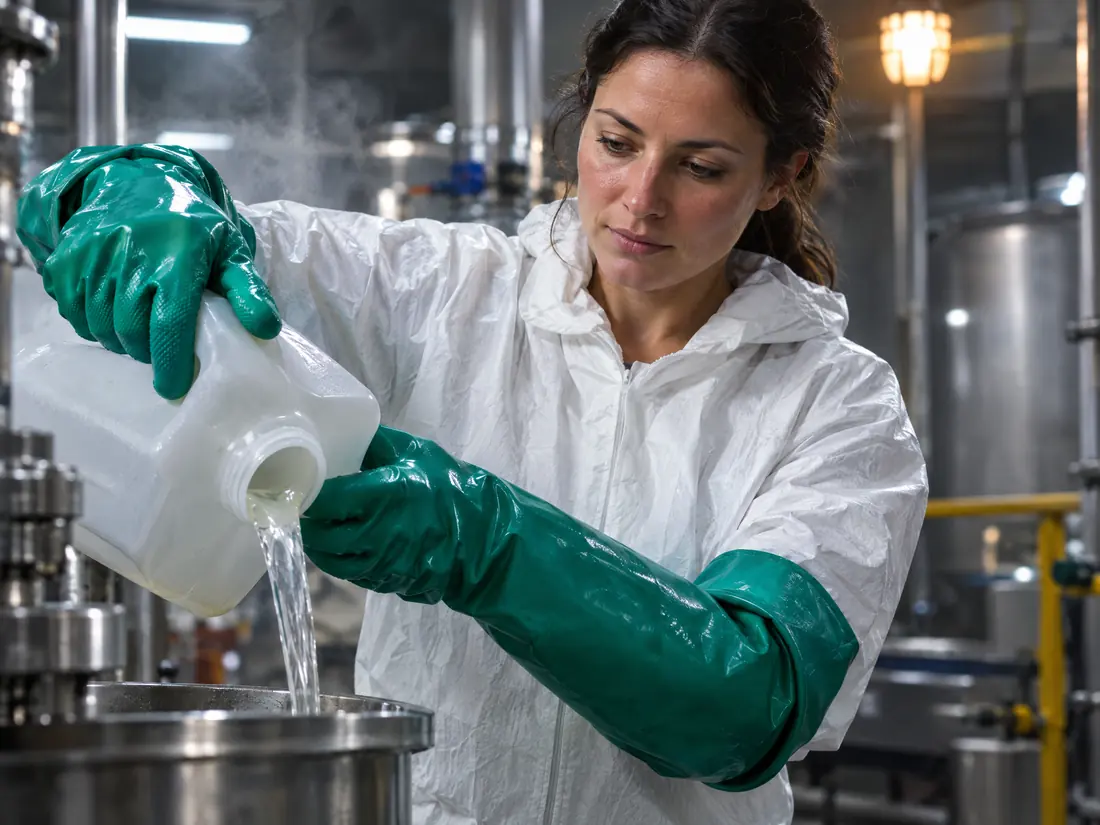
A chemical protection glove is tested for permeation and puncture resistance against specific chemicals. The critical point is this: no glove protects against every chemical; the material is chosen against what is being handled.
- Main group
- Hand protection
- Product types
- 6
- Standards
- EN 388 · EN 374
- Industries
- 1
Under EN 374 the breakthrough time against specific chemicals is measured. That time tells you how long the glove can stay in contact with the chemical; once it has elapsed the glove offers no protection, even if it looks intact.
The safety data sheet for your chemical is the most reliable way to choose the right material. Nitrile performs well across a broad range, while some solvents require specialised materials such as butyl or Viton.
Two numbers matter for a chemical glove: breakthrough time and permeation rate, both measured against a specific substance. A glove listed as suitable for a chemical may still only give ten minutes of protection. Working time must be planned against the breakthrough figure, not the label.
Thickness and length are decided by the task. Short gloves are enough for handling closed containers; work involving immersion requires a long cuff reaching the forearm. Double gloving is standard practice where the consequence of a breach is high.
Products in this group
- Material chosen against the chemical
- Usage planning based on breakthrough time
- Long-cuff and wrist-protecting models
- Disposable and reusable options
- Construction that can be taped to a protective coverall
Related standards
2 Standard
EN 388
Gloves against mechanical risks
EN 374
Gloves against chemicals and micro-organisms
Products in this group
06- Nitrile glove
- Latex glove
- PVC glove
- Butyl glove
- Long cuff chemical glove
- Liquid-proof glove
Industries we serve
Related product groups
Hand protection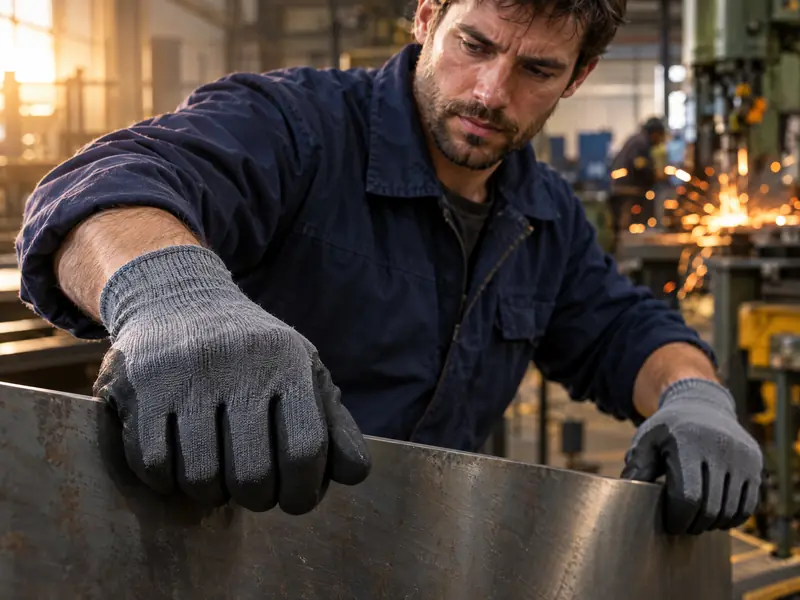

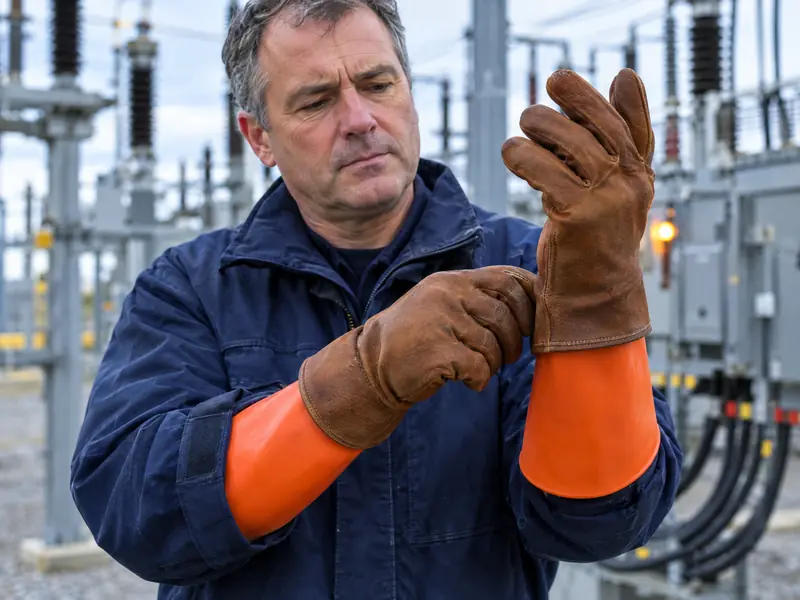
For areas needing electrical insulation or static control.
See details
A two-ended group: from the cold store to hygienic use.
See details
Frequently asked questions
Which glove for which chemical?
Selection follows the information in the chemical's safety data sheet and the glove's breakthrough time data. Share your chemical list and we will identify the right material together.
Can nitrile handle every chemical?
No. Nitrile is strong against oils, greases and many solvents but weak against some ketones and chlorinated solvents. Butyl or viton is required for those, chosen from the chemical's data.
Can a chemical glove be reused?
Only after documented decontamination, and never if it shows swelling, softening or discolouration. Any of those signs means permeation has already begun.
How is cuff length chosen?
Short gloves are enough for handling closed containers; immersion work requires a long cuff reaching the forearm. Double gloving is standard where a breach would be serious.
Is nitrile suitable for every chemical?
No. Nitrile is strong against oils, greases and many solvents but weak against some ketones and chlorinated solvents, which call for butyl or viton.
Request a quote for this group
Tell us your headcount, the hazards on site and your delivery schedule; we will work out the fabric options, branding and pricing together.
Currently for corporate supply and wholesale custom production; retail coming soon.
Quote request
Fill in the form and we will come back to you the same working day. You can also reach us on WhatsApp.