Safety equipment
Respiratory protection
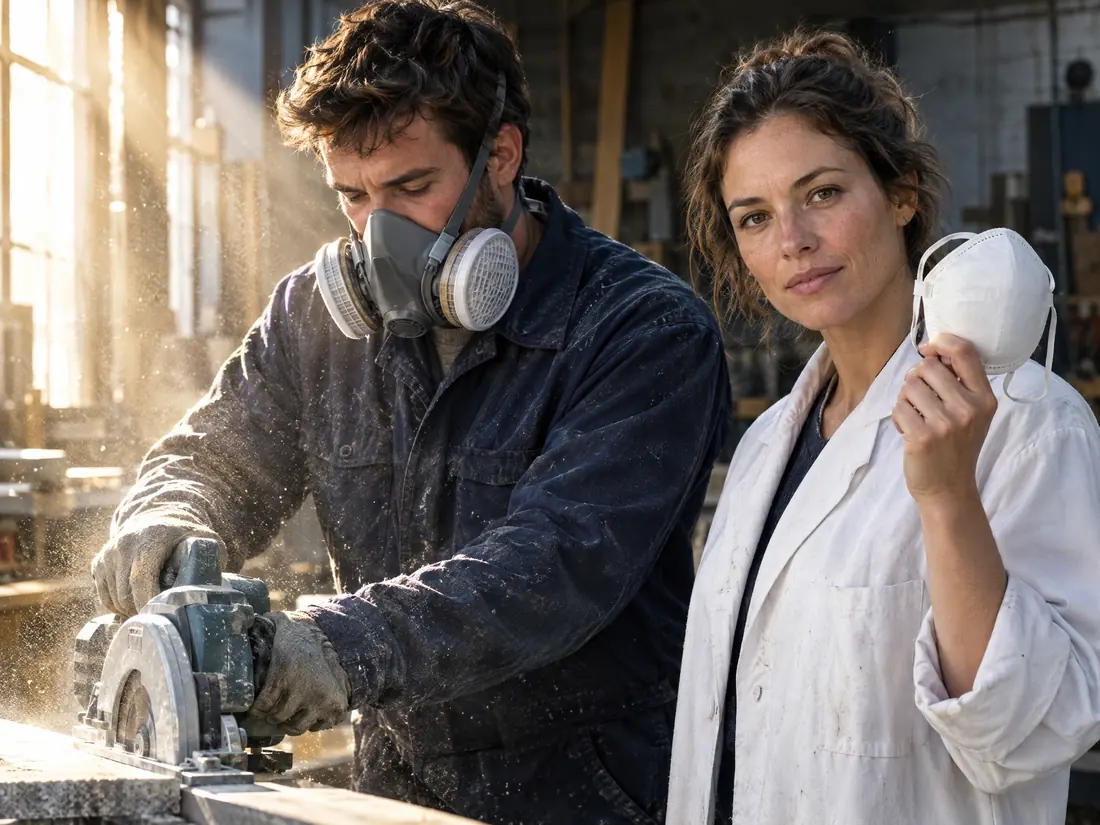
Respiratory protection stops airborne dust, fume, aerosol and gas being inhaled. Filtering half masks are classified under EN 149 as FFP1, FFP2 and FFP3; the class indicates filtration efficiency.
- Main group
- Safety equipment
- Product types
- 8
- Standards
- EN 149
- Industries
- 2
A tight face seal matters more than the class. Air leaking around the edge bypasses the filter, and beards or the wrong size are the most common causes.
Dust masks are useless against gas and vapour; exposure to those requires a half or full face mask with a filter matched to the substance. Filter type and change intervals are planned against exposure.
Respiratory protection begins with identifying the contaminant and the oxygen level. Filtering masks only remove what their filter is rated for and never work in oxygen-deficient atmospheres; those require supplied air. Getting this distinction wrong is the most dangerous error in personal protective equipment.
A tight-fitting mask only works with a seal, and a seal is not possible over facial hair. Fit testing and a daily user seal check are what turn the equipment into actual protection, and both should be written into the procedure rather than left to habit.
Products in this group
- FFP1, FFP2 and FFP3 class options
- Valved and unvalved models
- Half face and full face mask systems
- Filter type selected against exposure
- Bulk supply and stock planning
Related standards
1 Standard
EN 149
Filtering half masks (FFP)
Products in this group
08- FFP2 mask
- FFP3 mask
- Valved dust mask
- Half face gas mask
- Full face gas mask
- Gas filter
- Particulate filter
- Welding respirator
Industries we serve
Related product groups
Safety equipment

A barrier for eyes and face against swarf, dust, sparks and splash.
See details


Frequently asked questions
What is the difference between FFP2 and FFP3?
Filtration efficiency differs; FFP3 offers higher efficiency and captures finer particles. Selection should follow exposure measurement in the environment.
Does a dust mask protect against gas?
No. Dust masks capture particles, not gas or vapour. Gas exposure requires a mask with a chemical filter matched to the substance.
What is the difference between FFP2 and FFP3?
Filtration efficiency and total inward leakage. FFP3 filters a higher proportion of fine particles and is required for the more hazardous dusts; the selection follows the substance, not general preference.
When is a filter replaced?
Particle filters when breathing resistance rises noticeably; gas filters on a time schedule or when odour or taste breaks through — though relying on smell alone is unsafe for substances with poor warning properties.
Does facial hair affect protection?
Decisively. A tight-fitting mask only works with a seal, and a seal is impossible over facial hair. Fit testing and a daily seal check belong in the written procedure.
When is a filter replaced?
Particle filters when breathing resistance rises noticeably; gas filters on a schedule or when odour or taste breaks through, though smell alone is unsafe for substances with poor warning properties.
Request a quote for this group
Tell us your headcount, the hazards on site and your delivery schedule; we will work out the fabric options, branding and pricing together.
Currently for corporate supply and wholesale custom production; retail coming soon.
Quote request
Fill in the form and we will come back to you the same working day. You can also reach us on WhatsApp.